


Achieving high levels of flatness and parallelism is one of the most critical requirements in precision engineering. Whether the component is used in automotive transmissions, hydraulic pumps, bearing assemblies, or aerospace systems, any deviation in these parameters may lead to performance issues, excessive wear, or reduced lifespan. This is why many manufacturers rely on the double disc grinding machine—one of the most efficient technologies for achieving perfectly parallel and flat surfaces on metal components.
The core advantage of double disc grinding lies in its unique structure. The machine uses two opposing abrasive wheels that apply equal pressure to both sides of the workpiece simultaneously. This symmetrical force distribution minimizes distortion and ensures that material removal is consistent across the entire surface. The result is superior thickness control, improved flatness, and excellent parallelism.

In addition to its precision, double disc grinding is also extremely efficient. Compared with conventional single-surface grinding, the process doubles the productivity by machining two surfaces at once. This allows manufacturers to reduce cycle time, increase throughput, and lower operational costs—making it an ideal solution for high-volume production environments.
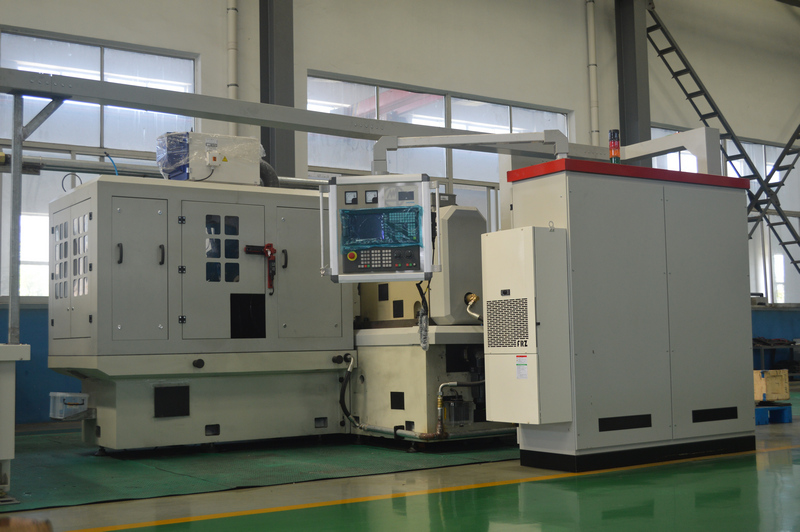
Another important factor contributing to its precision is stability. Modern double disc grinders incorporate rigid machine structures, advanced hydraulic systems, and CNC controls. These elements work together to reduce vibration, maintain wheel alignment, and ensure the grinding force remains stable throughout the process. In industries where tolerances can be as tight as ±0.005 mm, such stability is essential.
Cooling and lubrication systems also play a major role in maintaining flatness and parallelism. Proper coolant flow reduces heat generation and prevents thermal distortion, which is critical for achieving consistent results. Many machines also use high-grade filtration systems to keep the coolant clean, further enhancing repeatability.
In addition, double disc grinding is suitable for a wide variety of materials. Manufacturers can choose different wheel types—such as CBN or diamond—to handle hardened steel, alloy steel, stainless steel, powder metallurgy components, and more. This flexibility makes the process ideal for diverse industries with strict precision requirements.
For businesses looking to achieve superior flatness, impeccable parallelism, and high productivity, the double disc grinding machine continues to be one of the most reliable and cost-effective choices in modern manufacturing.