


If you visit large manufacturing plants today, you'll notice a distinct shift: grinding machines that once operated independently are gradually being “integrated into production lines.” This isn't coincidental—it marks a crucial step in manufacturing's progression toward automation and continuous production. Within this transformation, the incorporation of double disc grinding machines has become particularly pivotal.
Double disc grinding machines possess a natural advantage—stable and controllable processing cycles. A workpiece requires only one feed and one clamping operation to simultaneously grind both surfaces, resulting in a highly regular output rhythm. This makes them exceptionally well-suited for integration with automated systems like robotic arms, vibratory feeders, and linear feeders. In other words, their “rhythmic consistency” is exceptionally strong—a quality highly valued in automated production lines.
The historical difficulty in integrating single-surface grinders into large-scale automation stemmed largely from cumbersome auxiliary operations, complex equipment synchronization, and susceptibility to loading/unloading errors. By completing dual-surface processing in a single operation, double-sided grinders eliminate intermediate steps, simplify loading/unloading mechanisms, and reduce potential failure points.
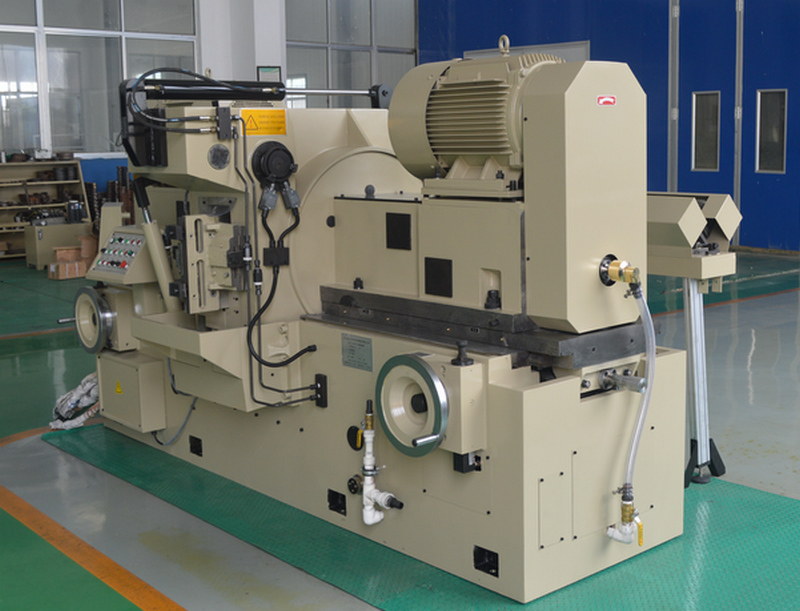
Beyond this, doubledisc grinding machines precisely control the thickness and parallelism of each batch of parts, stabilizing production line quality data and facilitating integration with in-line measurement systems. When upgrading factories, many companies prioritize upgrading the “double-end grinding process” because it delivers the fastest and most noticeable efficiency gains.
The most typical examples come from the automotive and new energy sectors. Components like motor end caps, gear shims, and powder metallurgy parts are seeing continuous production increases while dimensional tolerances grow increasingly stringent. Continuing with traditional grinding methods would not only be inefficient but also prone to batch consistency issues. Against this backdrop, double disc grinding machines have become a crucial “core component” in automated lines.
In the coming years, as more enterprises advance “machine substitution for human labor,” the combination of automation and double disc grinding machines will become the industry standard. This represents not only enhanced efficiency but also a higher level of stability and competitiveness in manufacturing. This shift is quietly transforming the entire machining industry landscape.