


The workflow of a double disc grinding machine constitutes a highly automated precision machining process designed to rapidly and accurately process two parallel end faces of a workpiece. Its core workflow comprises the following steps:
First comes loading. The raw parts awaiting machining are sorted and queued via a vibratory feeder or automatic feeding mechanism, enabling continuous, automated loading to prepare for batch production.
Next comes feeding and positioning. The parts are conveyed into specialised transfer mechanisms, such as through-feed belts or rotary work tables. This mechanism ensures each workpiece is delivered into the grinding zone between the two grinding wheels with the correct orientation and at a stable speed.
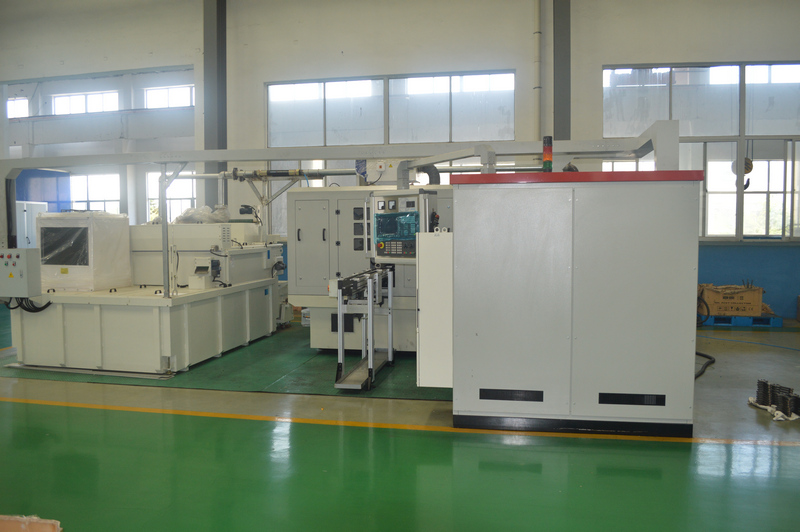
Then comes the core grinding operation. The workpiece enters the grinding zone formed by two counter-rotating grinding wheels. Both wheels simultaneously act upon the upper and lower end faces of the workpiece, removing the full stock allowance in a single pass. This process occurs under a deluge of cooling fluid to prevent thermal deformation and flush away swarf. Machining both faces in a single clamping operation directly guarantees the workpiece's exceptional dimensional accuracy, flatness, and parallelism.
Finally, the workpiece is discharged and inspected. The finished part exits the machine at the opposite end, travelling via a slideway or conveyor belt into a collection bin. On modern production lines, in-line measuring instruments are typically fitted to perform real-time inspection of critical dimensions, enabling immediate determination of quality compliance.
The entire process is seamless and highly efficient. Through simultaneous grinding in a single operation, the double disc grinding machine achieves both high precision and high output from a single machine.