


Historically, double disc grinding machines primarily served the automotive and bearing industries, processing conventional workpieces like engine components and bearing rings. However, as demand for precision machining grows across sectors, these machines are breaking through traditional boundaries. They have become highly sought-after in fields like new energy and medical technology, helping numerous enterprises overcome manufacturing challenges.
In the new energy sector, processing motor cores has long been a pain point. These cores are typically constructed from multiple layers of thin silicon steel sheets—thin and brittle materials that easily warp or deform under ordinary grinding machines. Even minor errors can lead to scrap rates exceeding 5%, resulting in material waste and production delays. To address this, equipment manufacturers introduced a customized double disc grinding machine. It features an adjustable grinding head tilt angle, distributing grinding force more evenly across the core surface to prevent localized deformation. Additionally, a precision zone cooling system maintains real-time temperature control during grinding, keeping workpiece temperatures within optimal ranges and minimizing thermal deformation at its source.
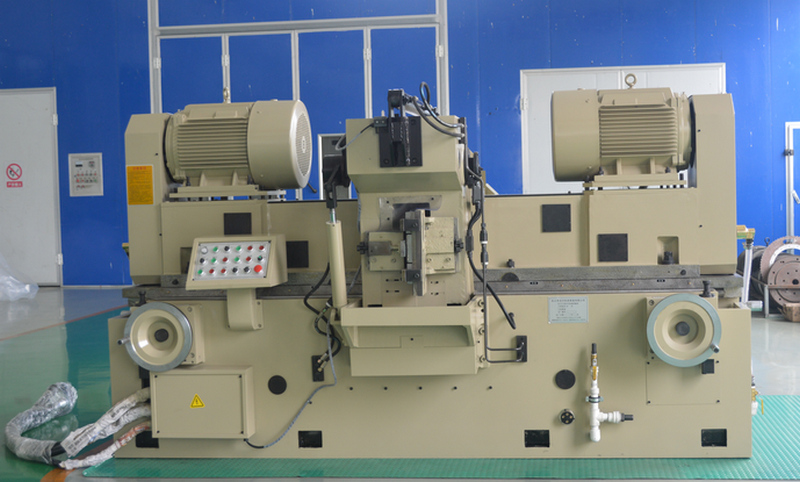
The medical industry imposes even stricter demands on part precision and surface quality. For instance, precision connectors like IV port adapters and surgical instrument fittings require not only dimensional accuracy but also mirror-like surface smoothness—failures could compromise safety. Traditional equipment required manual polishing after grinding, consuming time and compromising consistency. The new double disc grinding machine, by optimizing abrasive grit and grinding parameters, directly achieves surface roughness below Ra 0.2μm—fully meeting medical standards—eliminating post-grinding polishing and reducing processing time per part by 20%.
What further impresses manufacturers is the new dual-face grinder's automation integration capability. It seamlessly interfaces with production line robots and in-line inspection equipment: robots automatically deliver parts to the grinding station, then transfer them to inspection devices for dimensional checks post-processing. This fully automated workflow eliminates manual loading, unloading, and inspection, reducing labor costs while preventing human-induced errors. A medical component manufacturer reported that after implementing the automated production line, product yield rates jumped from 95% to 99%. The line now operates continuously 24 hours a day with exceptionally smooth workflow, eliminating the need for overtime shifts to meet order deadlines.