


In automotive parts production workshops, double disc grinding machines are the undisputed “precision champions.” From bearing rings to brake discs, from motor end caps to hydraulic valve blocks—these critical components directly impacting vehicle safety and performance almost universally undergo “fine finishing” on double-end grinding machines. Its status as an essential piece of equipment in automotive manufacturing stems from its ability to perfectly address three core demands in automotive component processing: high-precision matching, high-efficiency mass production, and high-stability assurance.
First, only double disc grinding machines can meet the stringent requirements for “precision coordination” in automotive components. Automotive bearings exemplify this need. The parallelism between their inner and outer ring faces must be controlled within 0.002mm—equivalent to one-thirty-fifth the diameter of a human hair. If parallelism deviates beyond tolerance, the bearing may produce abnormal noise and overheat during operation. In severe cases, this can cause shaft jamming, potentially triggering safety incidents. Double disc grinding machines employ “dual-surface simultaneous grinding” technology, applying force to both upper and lower surfaces simultaneously during processing. This eliminates secondary errors caused by the “flip-side processing” inherent in traditional single-surface grinding. For instance, when machining automotive wheel hub bearing rings, conventional grinders often produce parallelism errors exceeding 0.005mm, requiring repeated corrections. In contrast, double-sided grinding machines achieve compliance in a single pass, boosting the pass rate from 85% to 99.5%—fully meeting the automotive industry's “zero-tolerance” precision standards.
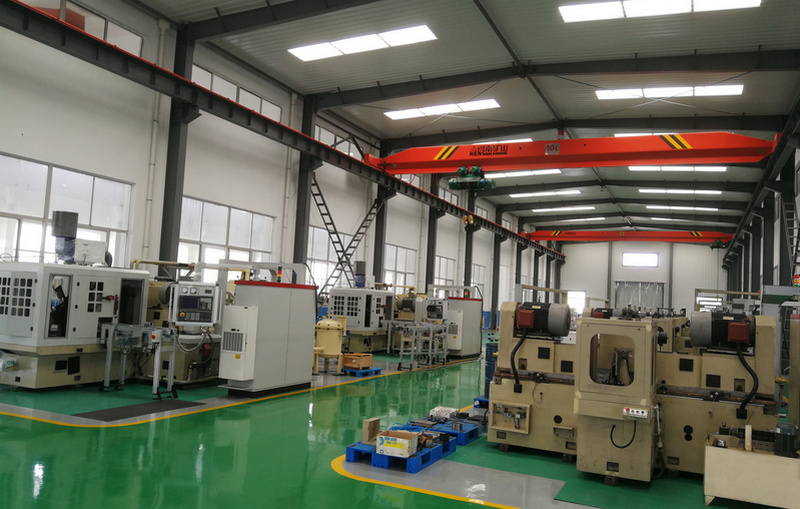
Second, the automotive industry's “mass production” nature relies on the high efficiency of the grinding machines. A single vehicle requires hundreds of precision components. For brake discs alone, mainstream automakers demand daily production capacities of thousands of units. Traditional grinding machines take 5 minutes to process a single brake disc. In contrast, dual-face grinding machines employ a “continuous feed + high-speed grinding” design, achieving wheel speeds of 4500 r/min and feed rates of 15 m/min. This reduces processing time per disc to under 1 minute, boosting daily output to over 12,000 units—five times that of conventional equipment. More crucially, it integrates “machining-inspection” functionality. Some models feature inline laser thickness gauges that instantly measure workpiece thickness post-machining, preventing defective parts from entering subsequent processes. This boosts efficiency while minimizing waste. For instance, after adopting double-sided grinding machines, one automaker reduced labor costs on its brake disc production line by 30% and shortened delivery cycles from 7 days to 3 days, enabling seamless handling of peak order volumes in the automotive industry.
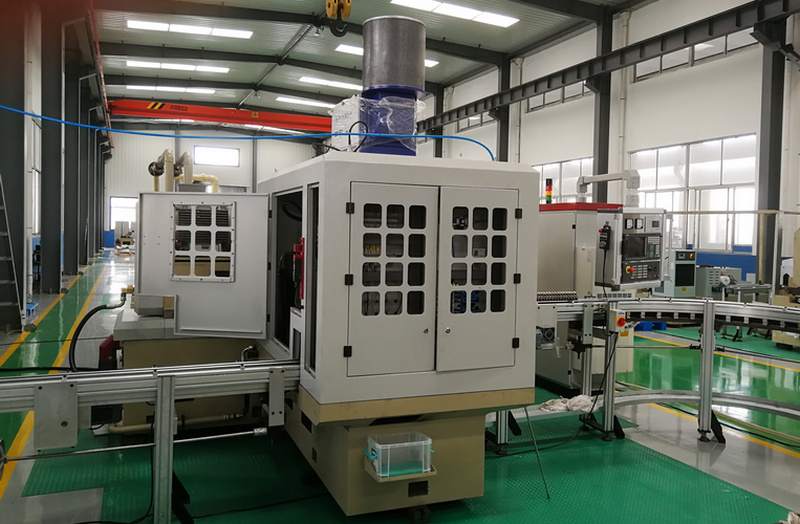
Finally, the “operational stability” of automotive components relies on double-sided grinding machines to ensure consistent machining. Automotive motor end caps are thin-walled parts, typically 3-5mm thick. Uneven force during machining can cause deformation. The elastic clamping mechanism of double disc grinding machines precisely controls clamping force, keeping workpieces flat during grinding with deformation ≤0.002mm. Simultaneously, its high-precision cooling system (coolant filtration accuracy ≤5μm) rapidly dissipates grinding heat, preventing thermal deformation that could compromise dimensional accuracy. Take automotive hydraulic valve blocks as an example: their end-face flatness directly impacts sealing performance. Flatness deviations exceeding 0.003mm can cause hydraulic system leaks, potentially leading to brake failure or steering lock-up. Valve blocks processed by double-face grinding machines maintain flatness errors consistently below 0.001mm, ensuring consistent performance across every component. This precision represents the core safeguard for achieving “zero-failure” standards in automotive manufacturing.
From bearings and brake discs safeguarding driving safety to motor end caps and hydraulic valve blocks supporting powertrains, double disc grinding machines serve as the “core link” in automotive component manufacturing through their “high precision, high efficiency, and high stability.” As new energy vehicles demand increasingly stringent precision standards for components—such as motor rotor end-face parallelism requiring 0.0015mm accuracy—the technological advancement of double-surface grinding machines will further propel automotive manufacturing toward greater precision and reliability.