


As the “core equipment” for high-precision machining, choosing the right double disc grinding machine can double batch production efficiency, while the wrong choice may lead to frequent rework. There's no need to get bogged down in complex configurations. By focusing on these 4 core parameters—“machining accuracy, grinding efficiency, workpiece adaptability, and stability performance”—you can precisely match production needs and avoid pitfalls.
First Parameter: Machining Accuracy — Focus on “Parallelism” and “Flatness”
The core value of a double disc grinding machine lies in its ability to “simultaneously grind both surfaces with high precision.” Precision parameters directly determine product yield rates. Two key indicators are crucial: First, parallelism—the parallel error between the upper and lower end faces of the workpiece. For standard components, this must be controlled within 0.005mm. For precision parts like bearing rings and hydraulic valve blocks, it must reach 0.002mm (equivalent to 1/35th the diameter of a human hair). Second is flatness, which measures the evenness of a single end face. High-quality machines achieve an error of ≤0.001mm per 100mm length. When selecting equipment, don't rely solely on manufacturer claims. Request third-party inspection reports or conduct on-site sample grinding tests. Use a micrometer to verify actual precision compliance—for instance, when machining a 20mm-thick stainless steel part, if parallelism exceeds 0.003mm, subsequent assembly may experience binding, compromising product performance.
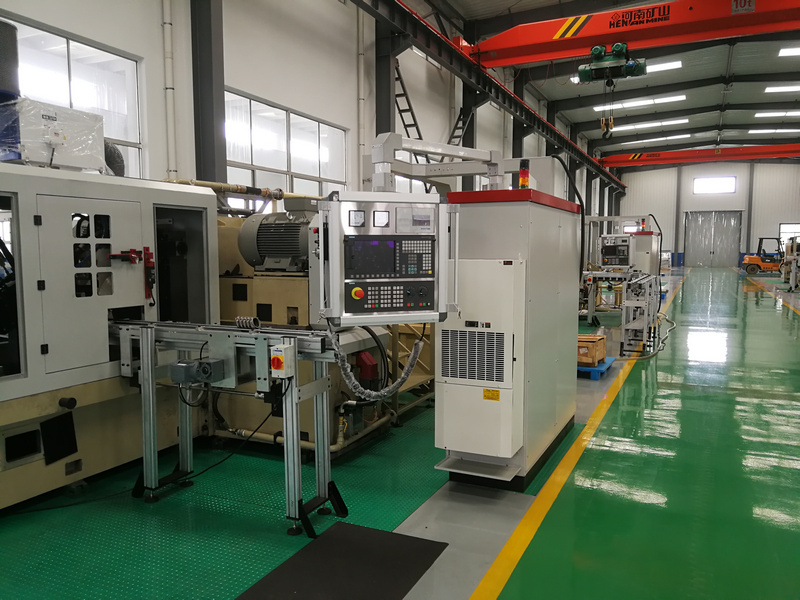
Second parameter: Grinding efficiency — Evaluate “grinding wheel speed” and “feed rate”
Efficiency parameters determine the equipment's production capacity ceiling, particularly crucial for batch production scenarios. First, focus on wheel speed. Standard models typically operate at 1500-3000 r/min. For high-hardness materials (e.g., hardened steel, ceramics), select high-speed models (3000-4500 r/min). Higher speeds increase material removal per unit time. For example, when processing aluminum alloy parts, high-speed models achieve 40% greater efficiency than standard models. Second, consider the feed rate—the speed at which the workpiece traverses the grinding zone. Common ranges are 5-20 m/min. Feed rate must match wheel speed: high speed with slow feed causes excessive wheel wear, while fast feed with low speed results in incomplete grinding. For example, in automotive brake pad machining, selecting a “3000 rpm grinding wheel + 12 m/min feed rate” combination enables processing over 2000 pieces daily, exceeding low-efficiency models by 500 pieces.
Third parameter: Workpiece compatibility — examine “maximum machining dimensions” and “clamping method”
Whether a machine can accommodate your workpieces depends on size and clamping parameters. First, maximum machining dimensions, including the workpiece's maximum diameter and thickness range. For example, to machine flanges with diameters between 50-200mm and thicknesses between 5-50mm, select a machine with a “maximum diameter ≥200mm and thickness range 3-60mm” to avoid rejection due to insufficient dimensions. Second, clamping method: Magnetic chucks suit ferromagnetic materials (e.g., carbon steel, cast iron), vacuum chucks accommodate non-magnetic materials like stainless steel and aluminum alloys, while elastic clamping mechanisms are ideal for thin-walled parts (e.g., motor end caps) to prevent deformation from excessive clamping force. For example, when machining a 3mm-thick aluminum alloy thin-walled part, a magnetic chuck may fail to hold securely, whereas elastic clamping ensures part flatness with post-grinding deformation ≤0.002mm.
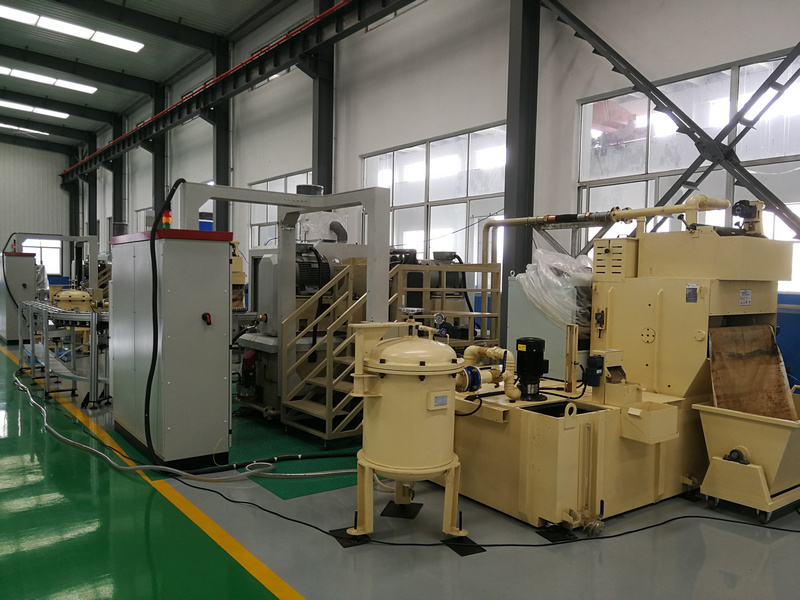
Fourth parameter: Stability — Evaluate “Spindle Rigidity” and “Cooling System”
Equipment stability determines long-term operating costs and minimizes production disruptions from frequent repairs. Focus on spindle rigidity: premium models feature integrated spindle units with precision ball bearings, achieving radial runout ≤0.001mm and minimal vibration during operation. On-site verification: After 30 minutes of idle running, touch the spindle housing. If vibration is slight and temperature ≤40°C, rigidity is excellent. If vibration is pronounced or temperature is excessively high, long-term use may lead to accuracy degradation. Second, the cooling system requires attention to coolant flow rate (recommended ≥20L/min) and filtration precision (≤5μm). Insufficient flow causes grinding wheel overheating and wear, while inadequate filtration allows swarf to contaminate the coolant, scratching workpiece surfaces. For example, when machining bearing steel components, poor filtration in the cooling system can easily cause scratches on workpiece end faces, increasing the defect rate from 1% to over 5%.
Selecting these 4 parameters ensures that the double disc grinding machine meets precision requirements while adapting to production scenarios, balancing efficiency and stability. For special needs (such as machining irregular parts or corrosive materials), manufacturers can be requested to customize clamping mechanisms or apply anti-corrosion coatings, further enhancing the equipment's practicality.