


The current precision machining industry faces the production challenges of accelerated product iteration, shrinking order batches, and diversified specifications. On the one hand, product update cycles in industries like automotive and medical devices have shortened to 6-12 months, requiring companies to frequently switch workpiece specifications. On the other hand, the proportion of small-batch custom orders has increased. Traditional general-purpose double disc grinders require tooling readjustment and parameter calibration for each production change, which takes up to 1-2 hours and results in less than 60% equipment utilization. Furthermore, some special-shaped workpieces (such as non-standard precision parts) cannot be processed using general-purpose equipment due to their unique structures, requiring manual grinding, which is inefficient and unstable. To meet these flexible production demands, customized double disc grinding machines, with their advantages of flexible adaptability and rapid response, have become key equipment for companies to enhance production flexibility.
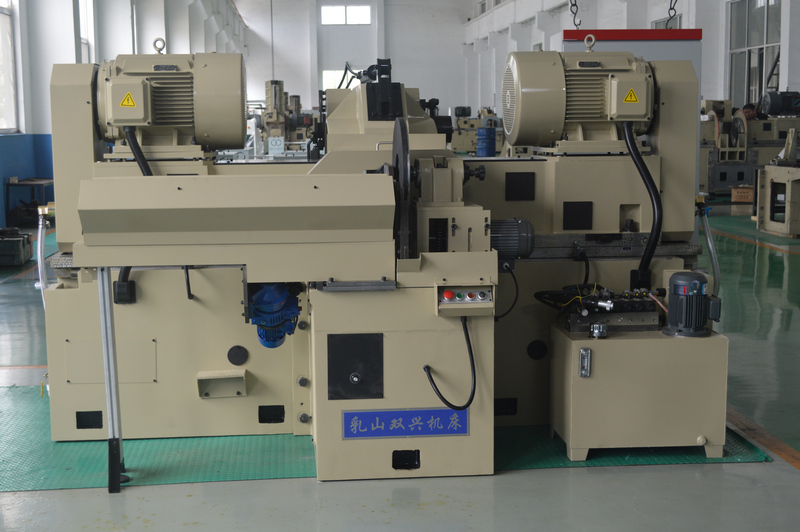
We have built a comprehensive service system centered around customization, creating a closed loop from needs analysis to equipment delivery. During the requirements matching phase, our engineers will develop customized machining plans and equipment design drawings based on the user's workpiece size (minimum machining diameter 5mm, maximum customization up to 1000mm), material properties (metal, ceramic, composite materials, etc.), precision requirements (parallelism, roughness), and production cycle time. Our equipment utilizes a modular architecture, prefabricating quick-change tooling modules to meet diverse machining needs. Changeovers require only replacing the corresponding module, reducing processing time to less than 15 minutes and increasing equipment utilization to over 90%. For special-shaped workpieces or specialized machining scenarios, we can customize specialized fixtures, adjust the grinding path, and adjust the grinding wheel configuration to achieve precise grinding of non-standard end faces (such as bevels and stepped surfaces).
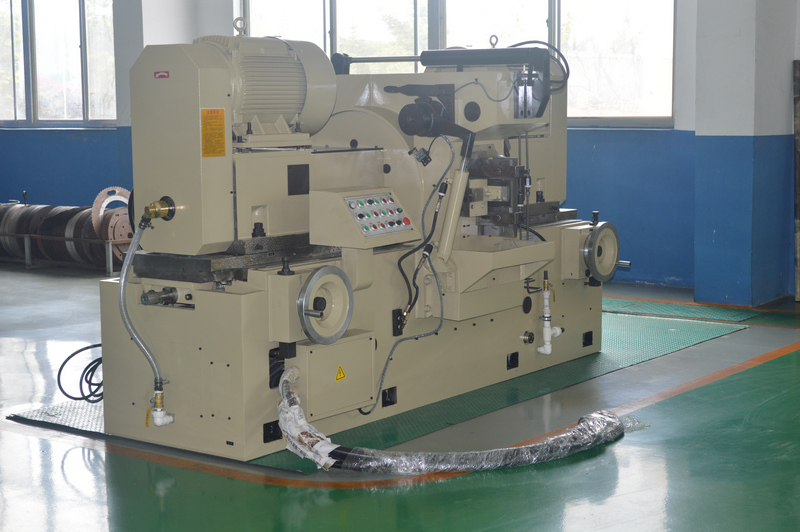
From an industry perspective, customized double disc grinders can meet the flexible production needs of diverse sectors: in the automotive parts industry, they accommodate rapid production changeovers for various workpiece specifications, such as steering knuckles and crankshafts; in the medical device industry, they support customized grinding of precision, special-shaped parts, such as heart stent components and artificial joints; and in the electronic components industry, specialized machining units can be designed for small workpieces, such as chip package bases and sensor housings. Through customized modifications, double disc grinders can overcome the machining limitations of general-purpose equipment, helping companies quickly respond to market order changes, improving production flexibility and order delivery efficiency, and providing strong support for flexible manufacturing upgrades in the precision machining industry.