


Double disc grinding machines can be classified according to different criteria, including structural form, feeding method, and processing accuracy.
By structural form, the main types are horizontal double disc grinding machines and vertical double disc grinding machines. In horizontal double disc grinding machines, the two grinding wheels are arranged horizontally, with the spindle axis in a horizontal position. The workpiece is conveyed through the grinding zone in the horizontal direction. This type of grinding machine has good stability and is suitable for processing long or heavy workpieces, such as shaft-type or sleeve-type parts, and is widely used in industries such as automobile manufacturing and bearing processing. In vertical double disc grinding machines, the grinding wheels are arranged vertically, with the spindle axis perpendicular to the ground. The workpiece typically passes between the upper and lower grinding wheels, assisted by gravity or a feeding mechanism. This type of machine has a relatively compact structure and a smaller footprint, making it suitable for processing flat workpieces such as brake pads and clutch plates. During processing, the workpiece is subjected to more uniform force, ensuring good parallelism.
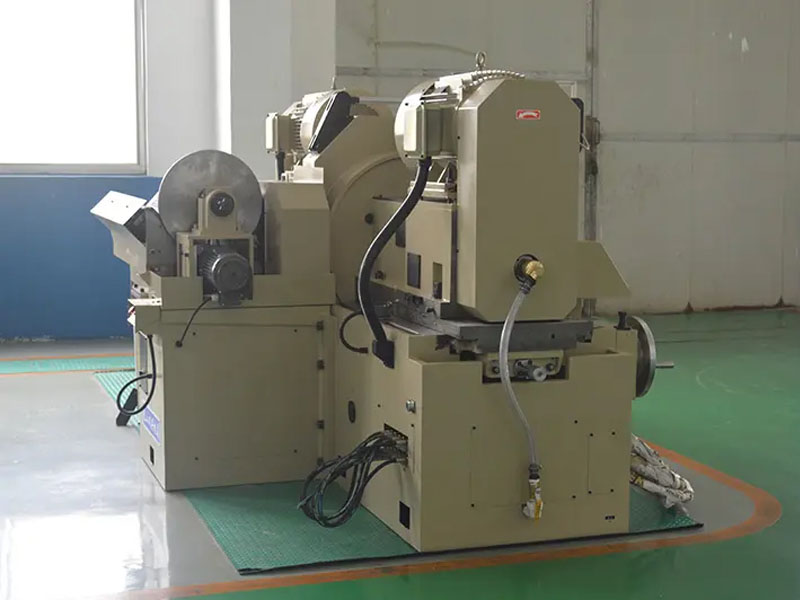
Based on feeding methods, double disc grinding machines can be categorized into through-feed, turntable, and reciprocating types. Through-feed double disc grinding machines use conveyor belts or feed rollers to continuously feed workpieces between two grinding wheels, automatically discharging them after grinding. This continuous, uninterrupted process offers high production efficiency, making it suitable for large-scale, standardized processing of small workpieces like bearing rings and piston pins. Turntable-type double disc grinding machines have a rotating workbench with multiple fixtures evenly distributed on it. Workpieces are clamped onto the fixtures and pass through the grinding area sequentially as the turntable rotates, completing the processing of both ends. This type of grinding machine has high positioning accuracy and is suitable for processing complex-shaped or precision-positioning workpieces, such as gear blanks and flanges. The angle of each turntable rotation can be precisely controlled to ensure processing consistency. In reciprocating double disc grinding machines, the workpiece is driven by the worktable to perform reciprocating motion, with grinding achieved through the feed of the grinding wheel. The travel of the worktable can be adjusted according to the length of the workpiece, making it suitable for processing workpieces with significant variations in length. It offers high flexibility and is commonly used in small-batch, multi-variety production.
Based on machining accuracy, there are standard-precision double disc grinding machines and high-precision double disc grinding machines. Standard-precision double disc grinding machines typically achieve machining accuracy within the range of 0.01–0.03 millimeters, with parallelism error not exceeding 0.02 millimeters, sufficient to meet the machining requirements of general mechanical parts such as standard bushings and gaskets. High-precision double disc grinding machines utilize more precise spindle systems and feed mechanisms, equipped with high-precision measurement and control systems, achieving processing accuracy of 0.001 to 0.005 millimeters, with parallelism error controlled within 0.005 millimeters. These are primarily used for processing parts with extremely high precision requirements, such as precision bearings and hydraulic valve plates. The manufacturing processes for such grinding machines are more complex, and their costs are relatively higher.
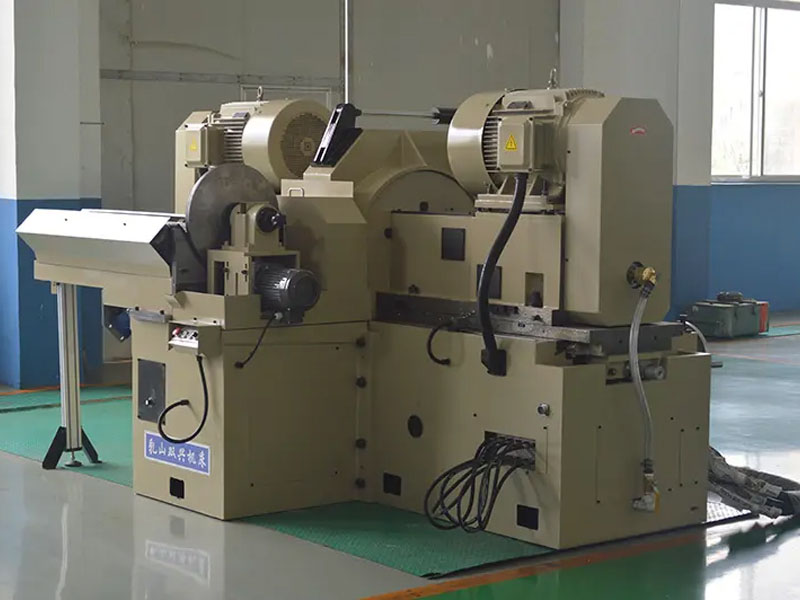
Additionally, there are special types of double disc grinding machines, such as centerless double-sided grinding machines, which do not require rigid clamping of the workpiece. Instead, they rely on the workpiece's own center of gravity and the guidance of the feeding mechanism to pass through the grinding area, making them suitable for processing long, slender, and easily deformable workpieces, thereby avoiding deformation issues caused by clamping. There are also specialized grinding machines designed for specific workpieces, such as brake pad-specific grinding machines and magnetic ring-specific grinding machines. Their structure and parameters are optimized according to the specific processing requirements of the workpiece, thereby improving processing efficiency and quality stability.