


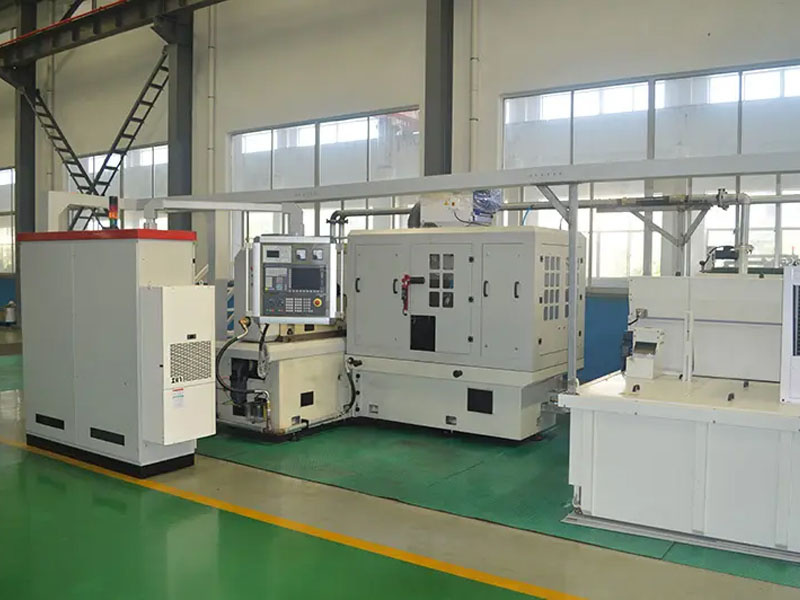
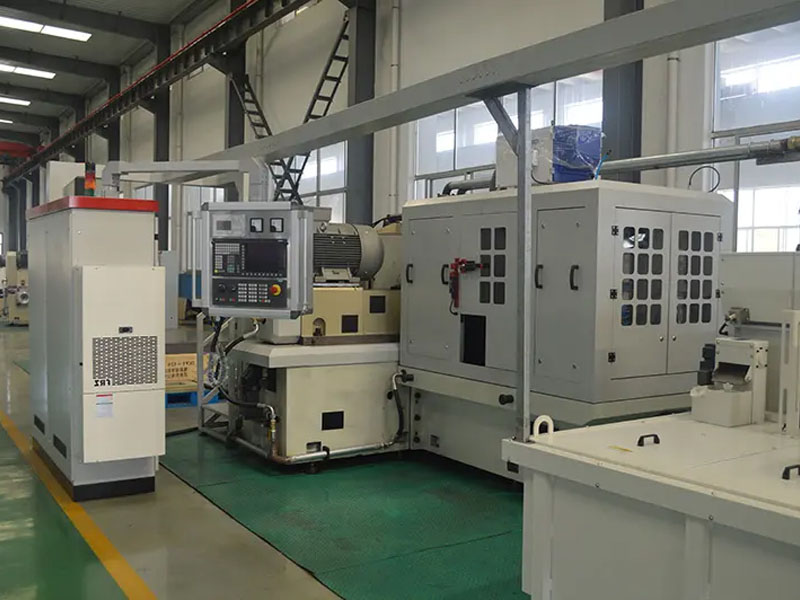
A double disc grinding machine is a specialized piece of equipment designed for simultaneously grinding both ends of high-precision parts. Compared to traditional single-end grinding equipment, it offers significant advantages such as high processing efficiency, stable processing accuracy, and strong automation capabilities. It is widely applied across multiple industrial sectors including automotive, machinery, bearings, electronics, energy, and new materials. So, specifically, what types of parts are most suitable for processing on a double disc grinding machine?
1. Engine connecting rod parts
Double disc grinding machines play a crucial role in the mass production of engine connecting rods. As an important component in engines for transmitting power, the parallelism and end face precision of the two ends (small-end bore and large-end bore) of connecting rods are of critical importance. Traditional processes often result in dimensional deviations, whereas those machines enable simultaneous grinding of both surfaces with a single setup, significantly improving processing consistency and cycle efficiency. They are now standard equipment on connecting rod production lines.
2. Gears and Bearing Rings
In the machining of gears and bearings, the perpendicularity and parallelism of the end faces directly affect assembly and operational performance. Double disc grinding machines can precisely control the machining volume of both end faces, achieving high-precision dimensional control. They are suitable for automated loading/unloading and inspection, and are widely applied in high-end gear manufacturing and bearing processing, particularly for continuous machining of large-volume, high-precision parts.
3. Carbon-ceramic brake discs / cylinder heads / square cylinder heads
With the development of new energy and high-performance vehicles, there is growing demand for high-hardness, special-material components such as carbon-ceramic brake discs, cylinder-type parts, and cylinder heads. Dual-face grinding machines feature high-rigidity structures and precision guide systems, enabling high-precision grinding of large-allowance components. They are the preferred solution for addressing grinding challenges in high-hardness parts and can be flexibly customized according to component dimensions.
4. Cross Shafts, Valve Blocks, and Hydraulic Components
Valve blocks, cross shafts, and connecting plates—commonly used components in hydraulic systems—typically have strict requirements for the perpendicularity and flatness of both end faces. When processing such workpieces, the double disc grinding machine not only maintains high precision but also achieves automated processing through a reciprocating feed system combined with four-axis control, significantly reducing manual intervention and enhancing production line stability.
5. Single-crystal silicon wafers, electronic ceramics, and other new materials
In addition to traditional metal components, double disc grinding machines are also suitable for high-hardness, high-fragility new materials such as single-crystal silicon wafers, ceramic plates, optical glass, and sapphire. These materials have extremely high requirements for end-face machining and are prone to breakage. Some high-end grinding machines are equipped with constant-pressure grinding, automatic compensation, and online detection systems, enabling precision machining, making them suitable for industries such as electronic components and optoelectronics that demand stringent flatness requirements.