


The bearing industry's strong preference for double disc grinding machines stems from their ability to precisely meet the stringent demands of bearing production for efficiency, high precision, and stability. As a core component of mechanical operation, the end face precision of bearing components such as rings and rolling elements directly impacts the bearing's rotational precision, lifespan, and noise levels. Double-sided grinding machines have emerged as the industry's top choice due to their unique advantages.
From a precision perspective, the high precision requirements of bearings are the primary reason for selecting double disc grinding machines. The parallelism, flatness, and thickness tolerances of bearing rings are critical indicators. Double disc grinding machines achieve micron-level processing precision through dual grinding wheels operating in opposite directions, utilizing high-precision guideways and servo systems, effectively ensuring the dimensional consistency of bearing rings. During the grinding process, the workpiece is uniformly clamped with symmetrical force application, reducing deformation caused by uneven force distribution. Compared to single-face grinding, both end faces can be processed in a single setup, eliminating positioning errors caused by re-clamping, thereby significantly improving processing accuracy and surface quality, ensuring stable operation and low noise performance of the bearing.
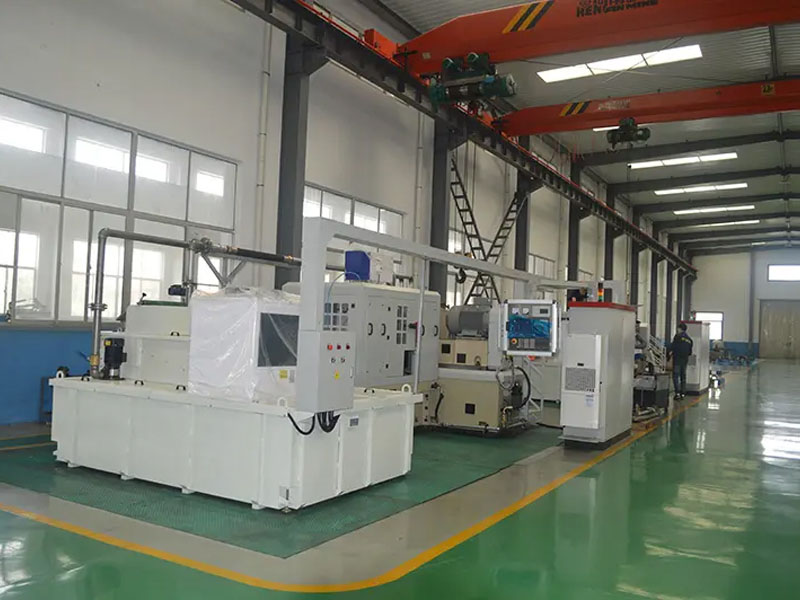
In terms of production efficiency, the double disc grinding machine demonstrates significant advantages. Bearing manufacturing operates under a high-volume production model, demanding extremely high processing efficiency. The grinding machine can simultaneously grind both ends of the workpiece, completing both surfaces in a single operation. Compared to single-sided grinding machines, processing efficiency is directly doubled. Additionally, modern double disc grinding machines often come equipped with automated loading/unloading systems, such as robotic arms or vibrating feeders, enabling unmanned continuous processing and further enhancing production efficiency.
Furthermore, the processing stability and reliability of double disc grinding machines align with the demands of the bearing industry. Bearing production requires extremely high equipment stability, as any processing fluctuations can affect bearing quality. Double-sided grinding machines feature a compact structure and high rigidity, with machine beds typically made of high-strength cast iron or mineral castings, providing excellent vibration damping performance to effectively suppress vibrations during grinding and ensure stable processing accuracy. Furthermore, the grinding wheel dressing system of the double disc grinding machine can automatically compensate for grinding wheel wear, maintaining constant grinding dimensions. This reduces precision degradation and downtime caused by grinding wheel wear, enabling the equipment to operate stably for extended periods and ensuring consistent and stable bearing product quality.
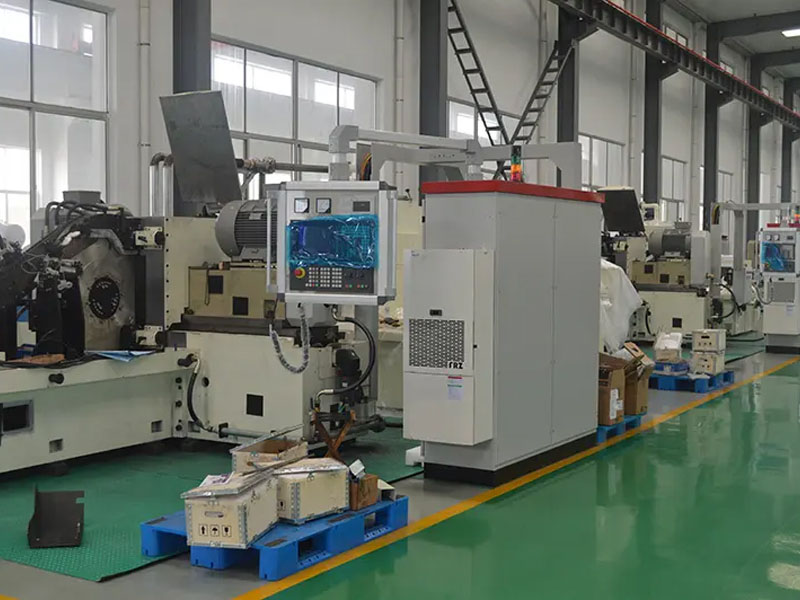
Moreover, the multifunctionality and adaptability of the double disc grinding machine are highly valued by the bearing industry. It is not only suitable for end-face machining of various types of bearing rings but can also process bearing cages, rolling elements, and other components. By replacing fixtures and grinding wheels of different specifications, it can accommodate workpieces of various sizes and shapes. For special material bearings such as ceramic bearings and stainless steel bearings, the double-end grinding machine can achieve efficient and high-precision machining by selecting appropriate grinding wheels and grinding parameters, meeting the increasingly diverse production requirements of the bearing industry.
It is precisely due to the dual-face grinding machine's outstanding performance in terms of precision assurance, production efficiency improvement, processing stability maintenance, and multi-functional adaptability that it perfectly aligns with the bearing industry's stringent requirements for product quality and production efficiency, thereby becoming an indispensable key piece of equipment in the bearing manufacturing process.