


A 30% increase in grinding efficiency is not the result of a single factor, but rather the result of multi-dimensional optimization of the grinding wheel, equipment, process, and cooling system. The core breakthrough lies in reducing grinding resistance, minimizing thermal damage, and increasing material removal rate. This can be analyzed in detail from the following aspects.
Grinding wheel performance is a key breakthrough area. Using high-performance abrasives can significantly enhance grinding capability. For example, cubic boron nitride (CBN) abrasives have a hardness second only to diamond, with thermal stability up to 1,300°C. Compared to ordinary alumina grinding wheels, CBN reduces cutting force by 30% and improves grinding efficiency by 40%, making it particularly suitable for high-hardness materials such as hardened steel and high-speed steel. The selection of abrasive grain size must also be precisely matched. Coarse grain sizes (#46–#80) are suitable for rapid removal of excess material, while fine grain sizes (#120 and above) are used for precision grinding. By combining “rough grinding + precision grinding” processes, efficiency and precision can be balanced. The choice of bonding agent is equally important. Ceramic-bonded grinding wheels have high porosity and self-sharpening properties, with heat dissipation efficiency twice that of resin-bonded wheels, making them suitable for continuous high-speed grinding. Metal-bonded wheels are used for form grinding, maintaining the shape accuracy of the grinding wheel.
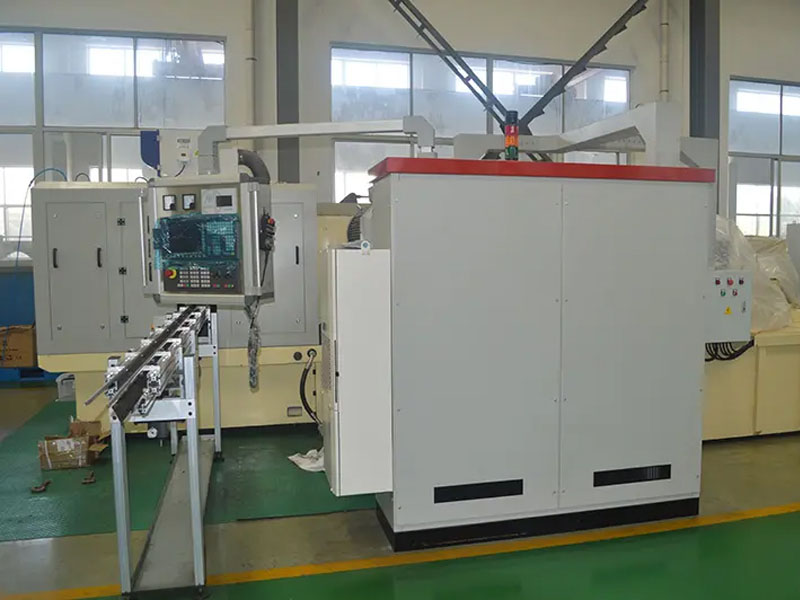
The rigidity and stability of grinding equipment directly impact efficiency. High-precision machine tools require spindle systems with high speeds (12,000–24,000 rpm) and high rigidity (radial runout ≤ 0.002 mm) to minimize grinding vibrations. Linear motor-driven feed systems offer fast response times and positioning accuracy of ±0.001 mm, achieving a 20% increase in feed speed compared to traditional ball screws. Additionally, intelligent control systems monitor grinding force, temperature, and other parameters in real time, automatically adjusting grinding parameters to prevent wheel clogging or workpiece burning caused by overload.
Grinding process optimization is the core strategy for improving efficiency. By adopting high-speed grinding technology, the grinding wheel linear speed is increased to 80-200 m/s, resulting in more abrasive particles participating in cutting per unit time, and material removal rates can be improved by 1-3 times. However, this requires a high-pressure coolant system (pressure ≥ 8 MPa) to remove grinding heat and prevent workpiece surface burning. Slow feed deep grinding (DEG) reduces the number of passes by increasing the grinding depth (1-30 mm) and lowering the feed rate, making it particularly suitable for forming grinding of difficult-to-machine aerospace materials, with significant efficiency improvements. Additionally, optimizing grinding paths using spiral or epicycloidal trajectories avoids repeated grinding in the same area, further reducing processing time.
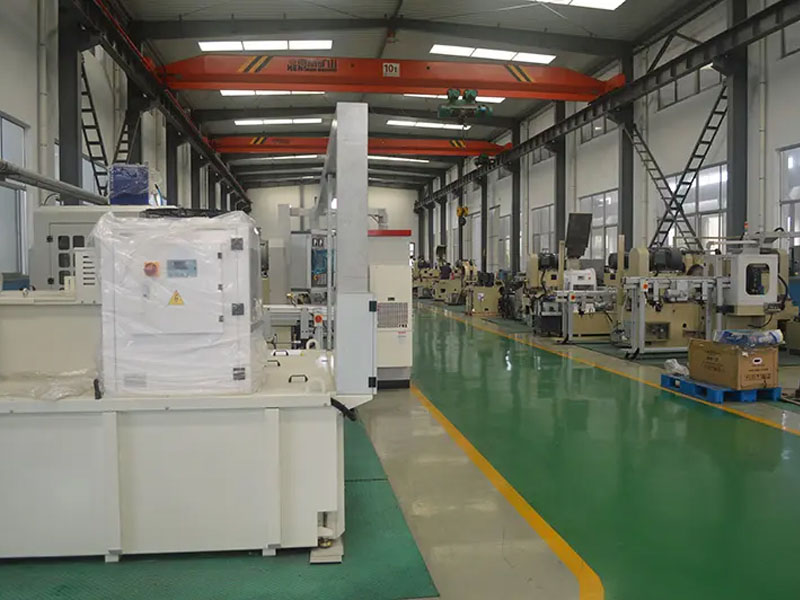
The role of the cooling system in improving efficiency cannot be overlooked. Traditional pouring cooling methods struggle to penetrate the grinding zone, whereas high-pressure internal cooling technology (pressure 3–10 MPa) directly sprays coolant through internal channels in the grinding wheel to the grinding interface, effectively reducing grinding temperature (by up to 50%) and minimizing grinding wheel clogging. Micro-lubrication (MQL) technology combines a small amount of cutting fluid with high-pressure gas to form a mist-like lubricant, reducing coolant consumption while improving lubrication conditions in the grinding zone. This is particularly suitable for materials such as cast iron and aluminum alloys. Additionally, the selection of coolant components is critical; grinding fluids containing extreme pressure additives can form a lubricating film at high temperatures, reducing grinding force by 15%-20%.