


In the realm of precision manufacturing, balancing machining accuracy with production efficiency remains a primary objective for enterprises. As a high-efficiency surface processing equipment, the double disc grinding machine has become an indispensable technology in the processing of automotive parts, bearings, hydraulic components, and semiconductor materials, thanks to its unique dual-grinding head layout and synchronous grinding process. Compared to traditional single-sided surface grinders, the most distinctive feature of the double disc grinder is its two opposing grinding heads, which can simultaneously grind the two parallel surfaces of a workpiece. This simultaneous approach not only doubles production efficiency but, more importantly, fundamentally solves the problem of force balance during the grinding process.
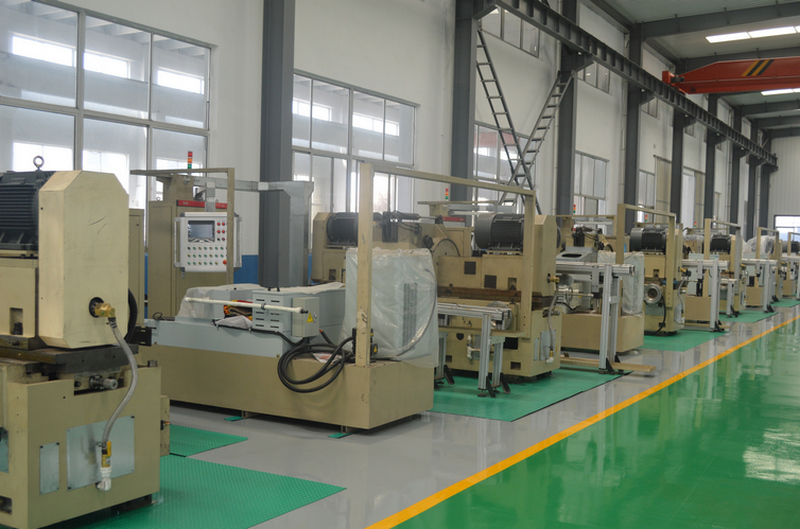
The working principle of the double disc grinding machine reflects sophisticated engineering ingenuity. During the process, workpieces are fed between two rotating grinding wheels via thru-feed, reciprocating, or rotary feeding mechanisms. Since the upper and lower (or left and right) surfaces of the part are subjected to grinding forces simultaneously, these symmetrical cutting pressures cancel each other out. This significantly minimizes the elastic deformation that often occurs in thin-walled or high-precision parts during machining. This technological advantage allows double disc grinders to perform exceptionally well when processing workpieces that require micron-level parallelism, flatness, and dimensional consistency. Whether it is valve plates for air conditioning compressors, connecting rods for internal combustion engines, or the end faces of high-precision bearings, the double disc grinder provides superior stability in geometric tolerances.
With the advancement of Industry 4.0 and intelligent manufacturing, modern double disc grinding machines are moving toward high levels of automation and CNC integration. Advanced machines are equipped with high-precision in-process gauging systems that can monitor changes in part thickness in real-time and automatically compensate for grinding wheel position based on wear. Furthermore, by optimizing wheel dressing compensation technology and cooling lubrication systems, the equipment can maintain a constant temperature rise during continuous high-intensity operations, thereby avoiding dimensional deviations caused by thermal stress. For manufacturing companies pursuing large-scale production and ultimate quality, investing in efficient double disc grinding processes not only means a reduction in the processing cost per unit but also represents a fundamental improvement in the product's competitiveness in high-end markets.