


Double disc grinding machines have become an indispensable tool in modern manufacturing, playing a vital role across a wide range of industrial applications where flatness, parallelism, and surface finish are critical. Unlike conventional single-sided grinding methods, double disc grinders can process both faces of a workpiece simultaneously, delivering high precision, consistent results, and efficient throughput. This capability makes them particularly valuable in industries that demand tight tolerances, superior surface quality, and repeatable accuracy across large production volumes.
In the automotive sector, double disc grinding machines are widely used to manufacture components that require strict geometric control and reliability under high operational loads. Engine parts, clutch plates, bearing surfaces, and transmission components all benefit from the dual-sided grinding process, which ensures parallelism and flatness while reducing material stress and deformation. The ability to maintain precise dimensions across every part helps automotive manufacturers meet industry standards, improve assembly accuracy, and enhance vehicle performance. Additionally, the high efficiency of double disc grinding allows manufacturers to produce large quantities of components in shorter cycles, reducing production costs and improving throughput.
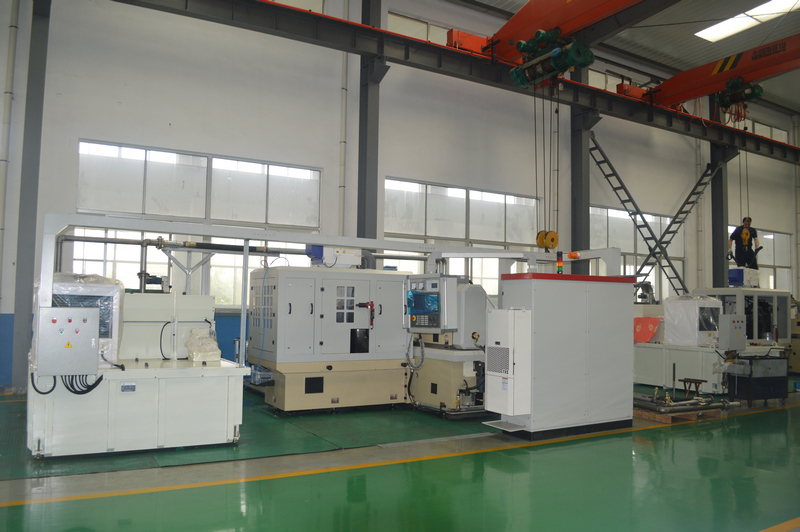
The aerospace industry is another sector where double disc grinding technology has proven invaluable. Aerospace components often operate under extreme conditions and must comply with exceptionally tight tolerances. Even minor deviations in thickness, flatness, or surface finish can affect aerodynamic performance, structural integrity, or assembly reliability. By grinding both faces simultaneously, double disc grinders ensure that precision parts such as turbine discs, actuator components, and structural assemblies meet these demanding requirements. The stable machining environment provided by advanced spindles, vibration-damping frames, and controlled cooling systems helps maintain consistent results, even for hard-to-machine materials like titanium and high-strength alloys.
Hydraulic and pneumatic systems also rely heavily on double disc grinding machines to produce components with high dimensional accuracy. Valve plates, seals, pump components, and precision hydraulic blocks require uniform thickness and smooth surfaces to maintain proper sealing, flow control, and mechanical efficiency. Double disc grinders enable manufacturers to produce these parts consistently, minimizing the risk of leaks, performance degradation, or premature failure. This reliability is particularly important in applications such as industrial hydraulics, automotive braking systems, and aerospace fluid systems, where component failure can have significant safety and economic consequences.
Metal fabrication shops and tooling manufacturers also benefit from double disc grinding technology. Die blanks, molds, and precision metal parts require exceptionally flat and parallel surfaces to ensure proper assembly and function. By processing both sides simultaneously, double disc grinding reduces the need for secondary finishing operations and minimizes material stress, resulting in higher-quality parts with consistent dimensional accuracy. This capability allows manufacturers to meet increasingly stringent specifications, improve workflow efficiency, and reduce scrap rates.
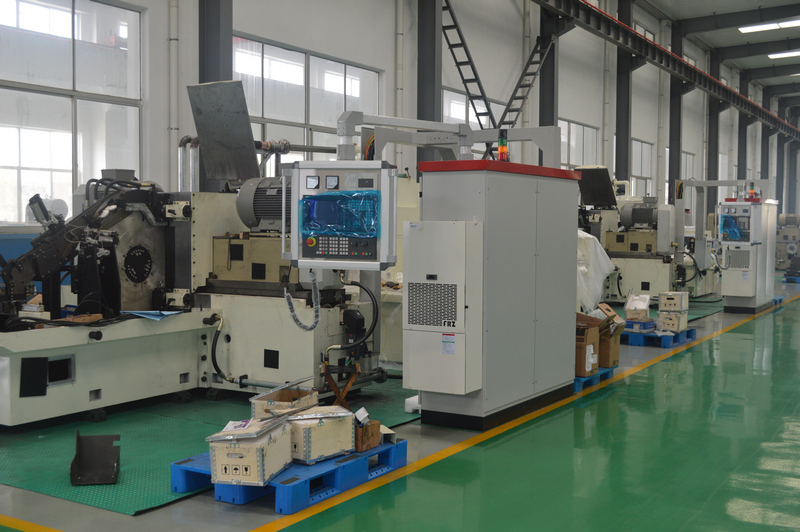
As manufacturing requirements continue to evolve and become more complex, the versatility and performance of double disc grinding machines have driven their adoption across a growing range of industrial sectors. From mass production in automotive plants to specialized aerospace component fabrication, and from hydraulic system manufacturing to precision tooling, these machines provide a reliable solution for maintaining high-quality standards. Advanced features such as CNC controls, automated feeding systems, and precision cooling further enhance their utility, making them adaptable to a variety of production demands and materials.
In summary, double disc grinding machines are essential in industries that prioritize surface flatness, parallelism, and dimensional accuracy. Their applications span automotive, aerospace, hydraulic, pneumatic, and metal fabrication sectors, enabling manufacturers to produce high-quality components efficiently and reliably. As production standards continue to rise, the dual-sided grinding capabilities, technological sophistication, and versatility of these machines ensure that they remain a critical tool for modern manufacturing, helping companies meet stringent quality requirements, improve efficiency, and maintain a competitive edge in the marketplace.