


Manufacturing is undergoing a shift from “experience-driven” to “data-driven” practices, with double disc grinding machines playing a pivotal role in this transformation. Historically, many grinding processes relied heavily on veteran operators' expertise, leading to significant variations between different personnel. Modern double disc grinding machines, however, leverage digital systems to achieve reproducible, traceable, and monitorable grinding precision.
New equipment commonly features digital feed control, closed-loop pressure feedback, and online wear monitoring. Even novice operators can achieve stable results by simply loading workpieces according to pre-set programs, significantly enhancing process consistency.
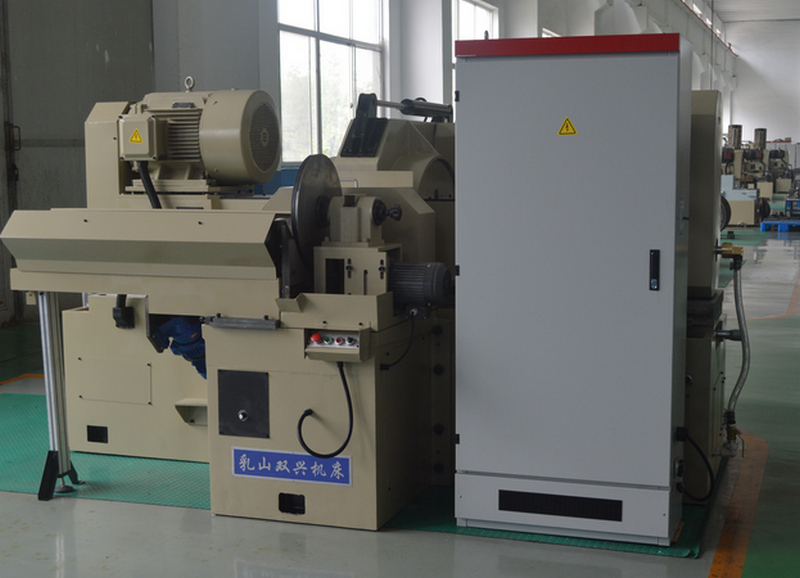
Concurrently, accelerated factory automation is driving the adoption of double-sided grinding machines. Their fixed material flow direction and stable workpiece orientation make them ideal for integration with robots or automated loading systems, paving the way for production line automation. Many factories have transitioned from manual grinding to semi-automation, gradually advancing toward fully automated assembly lines, substantially boosting production efficiency.
Industry consensus predicts that within the next 3–5 years, double disc grinding will become one of the most “standardized” processes within automated machining lines. This advancement not only elevates product quality but also represents a crucial step toward intelligent manufacturing practices across the entire industry.