


Within the grinding industry, a common question arises: “Can single-end grinding machines with part flipping replace double disc grinding?”
However, actual production proves that the two methods are entirely incompatible.
While single-end grinding offers flexibility advantages, flipping processes introduce significant unavoidable errors when handling thin components, hard materials, or batch production. Factories relying on manual positioning are particularly prone to issues like uneven thickness, poor parallelism, and warping.
The design philosophy of double disc grinding machines is “simultaneous forming of both sides.” The pressure, rotational speed, and feed rate applied by the left and right grinding wheels remain consistently synchronized. This ensures stable workpiece orientation and balanced force distribution during grinding, achieving highly consistent thickness and parallelism.
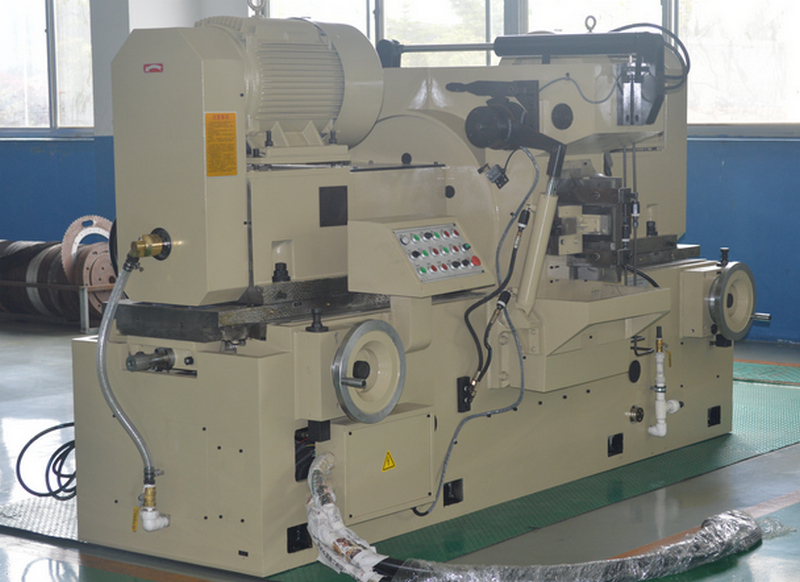
This is especially critical for the following components:
Powder metallurgy pressed parts
Gear shims
Valve plates
Bearing rings
Automotive stamped parts
Motor core end plates
If these components lose geometric stability, it directly impacts overall machine performance and may even pose safety risks. Consequently, double disc grinding is regarded by the industry as an irreplaceable core process.
Furthermore, modern double disc grinding machines achieve “self-stabilizing precision” through technologies like automatic wheel dressing and in-line measurement. During extended operation, they offer higher reliability and lower rework rates compared to traditional grinding methods.
Indeed, the value of double disc grinding lies not merely in its speed, but in its profound control over geometric accuracy—a capability that no other grinding method can fully replicate.