


The core mission of a double disc grinding machine lies in simultaneously machining two parallel end faces of a workpiece with high precision, achieving strict dimensional tolerances, excellent parallelism, and specific surface roughness. Its fundamental principle can be summarized as follows: based on a stable and precise reference, dynamic equilibrium of micro-cutting forces is ultimately achieved in the grinding zone through the precise transmission and compensation of mechanical motion.
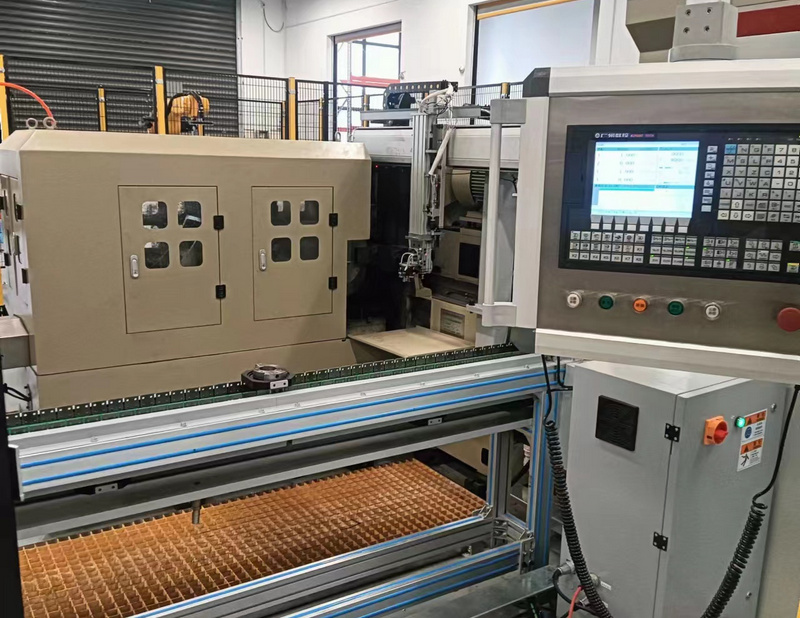
The foundation of this precision system lies in the machine tool's inherent static geometric accuracy. This serves as the prerequisite for all subsequent precision. It encompasses the precise parallelism between the two grinding wheel faces across their entire rotational range, as well as the perpendicularity between the spindle axis and the feed guideways. Any minute deviation here is amplified several times during machining, directly manifesting as parallelism errors or barrel runout in the workpiece. Furthermore, the spindle system's high rotational precision and exceptional rigidity ensure the grinding wheel maintains stable cutting posture even under high speed and pressure—fundamental to achieving superior surface quality and geometric accuracy. These static accuracies are determined by the machine tool's manufacturing quality, structural design, and assembly processes—the “inherent genetic makeup” of precision control.
Building upon this stable static foundation, precision control is achieved through a dynamic “dimensional chain” system. This system typically comprises a high-precision feed mechanism, a sensitive measurement feedback device, and a rapid-response CNC system. Its operation forms a closed-loop system: the CNC issues commands, the feed mechanism drives the grinding wheel or worktable to move, the displacement is detected in real-time by the measuring device and fed back to the system, which compares this feedback with the target value and immediately corrects any deviation. This closed-loop control ensures the grinding wheel approaches the workpiece with micron-level or even sub-micron precision, thereby precisely controlling material removal. Workpiece dimensional control is achieved precisely by regulating the relative distance between the two grinding wheel working surfaces.
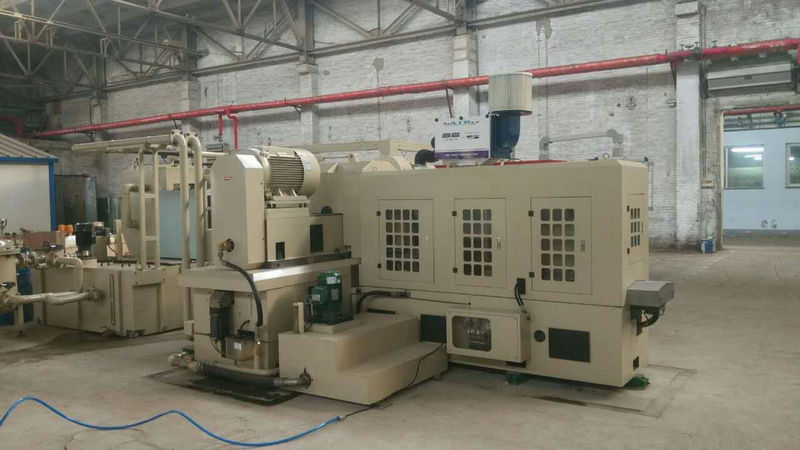
However, precision extends beyond mere geometric positioning. The true challenge during grinding lies in managing the dynamic variable of “grinding force.” Ideal double-sided grinding requires a balanced state of grinding force applied to both sides of the workpiece. Once this equilibrium is disrupted—for instance, due to uneven grinding wheel hardness, dulled wheels, or inconsistent cooling—the workpiece may deflect or vibrate under cutting forces, degrading flatness. Therefore, ultimate precision control manifests through optimized process parameters: matching the characteristics of both grinding wheels, employing constant-pressure grinding modes, and applying sufficient, effective cooling to maintain dynamic equilibrium in the grinding zone. Simultaneously, the entire process system—including the machine tool structure, spindle, workpiece, and fixture—must possess sufficiently high rigidity to resist deformation induced by grinding forces. This ensures that static accuracy is reliably transferred to the workpiece under load conditions.
In summary, precision control in double disc grinding machines constitutes a comprehensive principle spanning macro-structural integrity to micro-cutting dynamics, and from static geometry to dynamic closed-loop regulation. It originates from the machine tool's inherent geometric accuracy, achieves precise dimensional positioning through closed-loop servo systems, and ultimately materializes in the dynamic force equilibrium within the grinding zone. These three elements are indispensable, collectively forming the technological core of high-precision grinding.