


As a critical process for achieving high-precision parallelism and dimensional consistency, workpiece deformation during double disc grinding represents the primary bottleneck limiting quality enhancement. Deformation not only reduces yield rates but may also introduce hidden risks in subsequent assembly operations. To systematically minimize deformation, comprehensive process improvements must address three core areas: grinding force, thermal stress, and workpiece support.
Effective control of grinding forces is the primary prerequisite for deformation reduction. Excessive single-pass grinding depth directly causes plastic deformation and vibration marks. The core of process improvement lies in adopting a refined grinding strategy of “small depth of cut, multiple passes.” By reducing the feed per pass, both grinding force and heat generation are significantly lowered, particularly beneficial for thin-walled workpieces with low rigidity. Simultaneously, optimizing grinding wheel characteristics is crucial. Selecting grinding wheels with slightly coarser grit, softer hardness, and looser structure enhances self-sharpening properties, reduces clogging, and maintains sharp cutting edges while effectively lowering grinding forces. Furthermore, constant pressure grinding mode, compared to constant feed mode, automatically compensates for wheel wear and workpiece dimensional changes, providing a smoother grinding process that fundamentally suppresses force fluctuations.
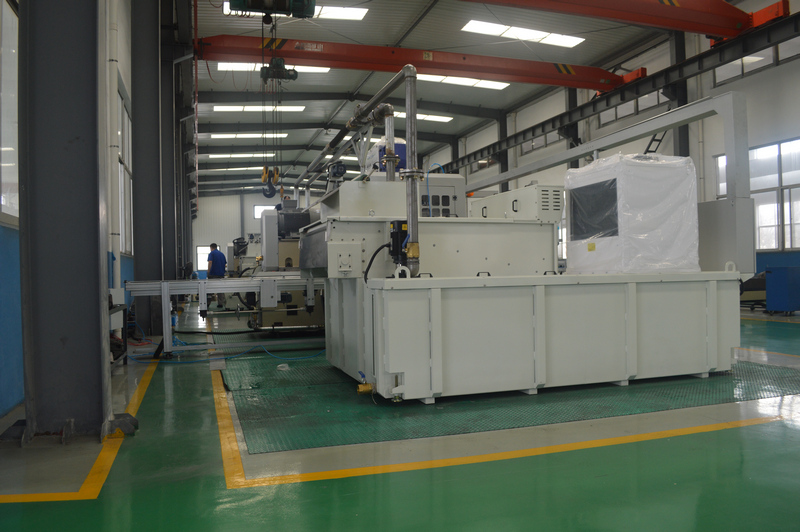
Thermal stress management is another critical solution to deformation issues. Localized high temperatures in the grinding zone are the primary cause of workpiece thermal expansion and residual stresses, with cooling efficiency directly determining the extent of deformation. It is essential to ensure the coolant possesses excellent lubrication and cooling properties, along with sufficient flow rate and pressure, enabling it to effectively penetrate the vapor barrier layer and fully enter the grinding zone. Improving the layout and angle of the coolant nozzles to precisely target the contact point between the grinding wheel and the workpiece achieves accurate spraying. For high-precision grinding, maintaining constant coolant temperature proves highly effective. This eliminates thermal deformation caused by temperature fluctuations, ensuring long-term dimensional stability.
Workpiece clamping and support methods also warrant attention. Improper fixture design introduces clamping stresses that cause springback deformation upon release. Prioritize methods like magnetic chucks or vacuum grippers that distribute clamping forces uniformly. For particularly deformable thin-section workpieces, adding elastic auxiliary supports beneath them or utilizing vacuum suction principles to provide uniform back support throughout the process can significantly enhance rigidity. In process planning, scheduling necessary stress-relief annealing steps is also critical. This involves eliminating internal stresses generated during machining through heat treatment after rough grinding before proceeding to finish grinding, effectively interrupting the transmission of stress deformation chains.
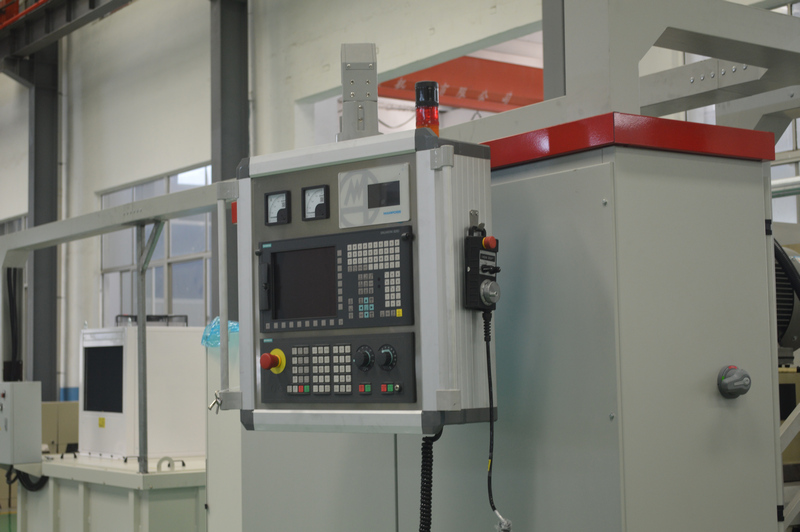
In summary, minimizing deformation in double disc grinding workpieces is a systematic endeavor. It requires process engineers to transcend isolated parameter adjustments and pursue holistic optimization across grinding force control, thermal management, and workpiece support. Only through the synergistic application of the aforementioned methods can significant improvements in workpiece geometric accuracy and shape stability be achieved, ultimately realizing high-quality grinding.