


As the automotive industry transitions from the internal combustion era to the new energy era, component manufacturing processes undergo comprehensive transformation. As core processing equipment, double disc grinding machines have undergone targeted upgrades through technological iteration to precisely meet the differentiated production demands of both vehicle types.
In manufacturing components for fuel-powered vehicles, double disc grinding machines primarily focus on processing traditional metal materials (such as cast iron and steel parts), including engine crankshafts, camshafts, and similar components. These applications demand high equipment wear resistance and batch processing efficiency. Take Shuangxing's LGM75C connecting rod double disc grinding machine as an example. Tailored for the machining characteristics of internal combustion engine connecting rods, it features a rigid machine body design enabling stable grinding for continuous 8-hour operation. This meets the large-scale production demands for internal combustion engine components and has already provided proven solutions for enterprises like SAIC-GM and Yuchai.
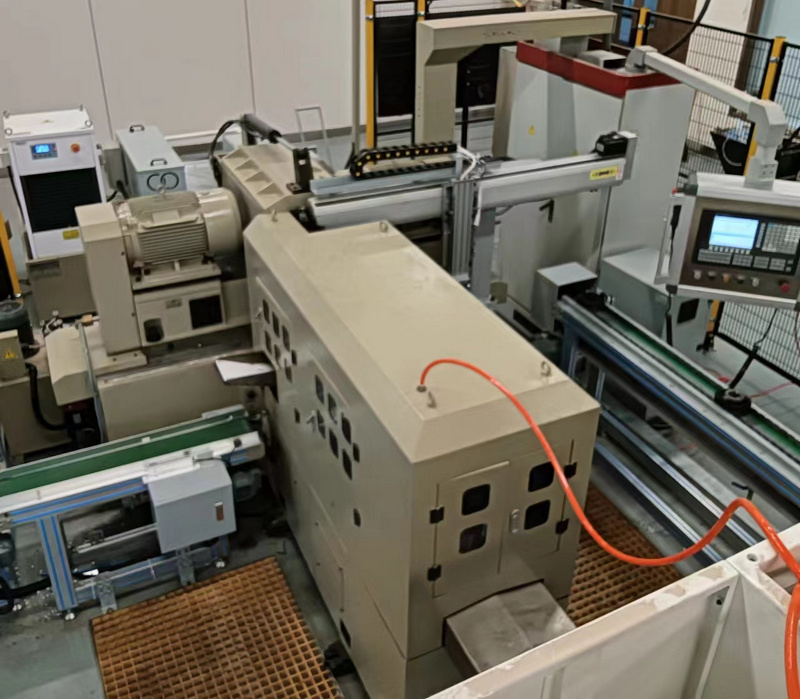
Manufacturing components for new energy vehicles presents entirely new challenges: On one hand, lightweight materials like aluminum alloys and carbon ceramics are widely adopted. These materials exhibit low hardness and susceptibility to deformation, making precision deviations common with traditional grinding machines. On the other hand, components related to motors and batteries—such as motor shafts and battery case end caps—demand even higher machining accuracy, requiring end-face flatness errors to be controlled within 0.001mm. To address this, Rushan Shuangxing developed the CNC fully automatic double disc grinding machine SX150D-13YL. Equipped with an adaptive grinding system, it automatically adjusts grinding force based on material hardness. Additionally, it features a laser online inspection module that corrects machining errors in real time, perfectly meeting the high-precision processing demands of new energy vehicle components. It is currently serving new energy vehicle manufacturers like BYD.
From internal combustion engines to new energy vehicles, double disc grinding machines continuously advance alongside the evolution of automotive component manufacturing processes through material adaptation, precision upgrades, and flexible modifications. They have become a critical equipment pillar driving the transformation of the automotive industry.