


As demands for product precision continue to rise in sectors like automotive components, bearings, and hydraulic parts—shifting from traditional “micron-level” to “sub-micron-level” standards—the limitations of conventional single-end grinding machines have become increasingly apparent. Industry data indicates that when processing batch components, conventional equipment typically requires 3-5 minute processing cycles per operation. Multiple flipping and calibration steps are necessary, often resulting in parallelism errors exceeding 0.003mm. Yield rates remain stagnant at 85%-88%, simultaneously constraining production capacity and failing to meet high-end manufacturing quality standards. Against this backdrop, double disc grinding machines integrating “simultaneous double disc grinding + full-process automation” are emerging as the core choice for precision machining enterprises upgrading their equipment.
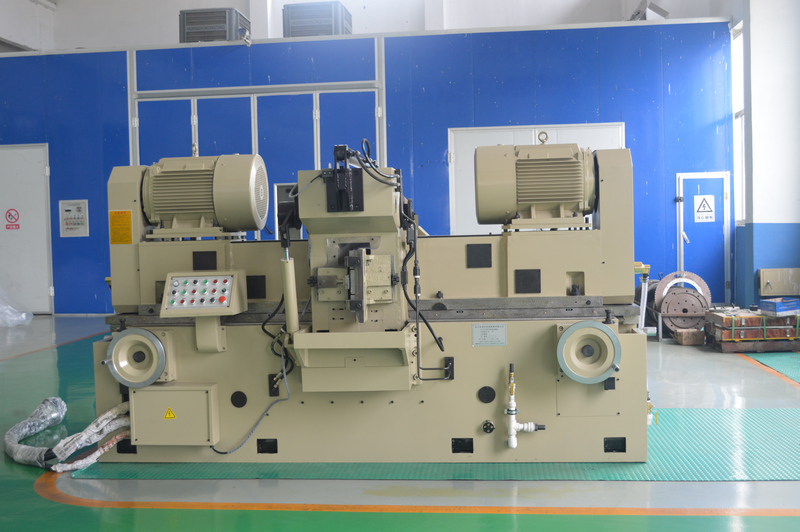
As a manufacturer specializing in the R&D and production of double disc grinding machines, we optimize core equipment performance to address industry pain points. For precision control, we employ imported high-precision linear guides and servo drive systems, coupled with closed-loop feedback technology using optical grating scales. This stabilizes end-face parallelism error within 0.001mm and achieves surface roughness as low as Ra0.1μm, fully meeting the machining demands of high-end components like bearing inner/outer rings, precision gears, and hydraulic valve blocks. For efficiency gains, our dual-station alternating operation design reduces single-cycle processing time to under 30 seconds—a 4-6x increase over traditional single-face grinders. Standard equipment includes automatic feeding mechanisms, in-line dimensional inspection modules, and automated chip removal systems, enabling unmanned continuous operation from "loading → grinding - inspection - unloading" unmanned continuous operation, reducing errors caused by manual intervention and lowering labor costs for enterprises.
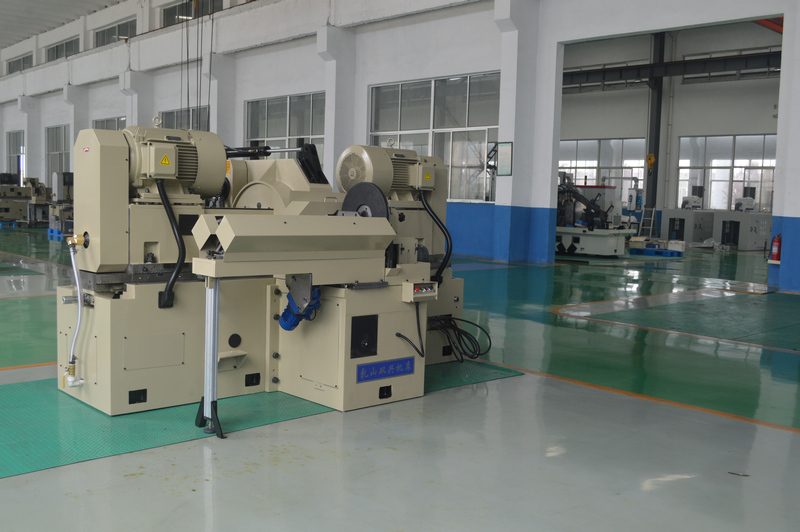
In terms of industry applications, double-sided grinding machines have been widely adopted in automotive components, precision bearings, and cemented carbide tools. To meet the processing needs of multi-specification workpieces, the equipment supports rapid mold change functionality, with changeover times controllable within 15 minutes, making it suitable for small-batch, multi-variety production scenarios. For large-sized workpieces, customizable extended worktables can accommodate parts up to 500mm in diameter and 500kg in weight, fulfilling single-pass double-sided grinding requirements for components like transmission housings and engine cylinder heads. The widespread adoption of double-sided grinding machines is driving the precision machining industry's transition from “extensive production” to “lean manufacturing,” providing core equipment support for enterprises to reduce costs and enhance efficiency.