


As modern manufacturing evolves, the range of materials used in industrial production continues to expand. From hardened steel to ceramics and composite materials, manufacturers are increasingly required to process difficult-to-machine materials while maintaining high precision and efficiency. In this context, the double disc grinding machine has become a critical solution for advanced material processing.
This article explores how double-sided grinding technology addresses the challenges associated with modern materials and why it is gaining widespread adoption among global manufacturers.
Industries such as aerospace, medical devices, and energy are increasingly relying on high-performance materials due to their superior strength, durability, and resistance to extreme conditions.
Common materials include:
Hardened alloy steel
Tungsten carbide
Technical ceramics
Composite materials
However, these materials present significant challenges in machining, including tool wear, heat generation, and difficulty in achieving fine surface finishes.
The simultaneous grinding of both sides ensures balanced cutting forces, reducing stress on the workpiece. This is especially important when processing brittle materials like ceramics.
A double sided grinding machine for carbide can achieve consistent thickness without causing micro-cracks or deformation.
Heat management is critical when working with advanced materials. Double disc grinding distributes heat evenly across both surfaces, minimizing thermal distortion.
The process produces excellent surface finishes, often eliminating the need for additional polishing operations. This is particularly beneficial in industries where surface integrity is crucial.
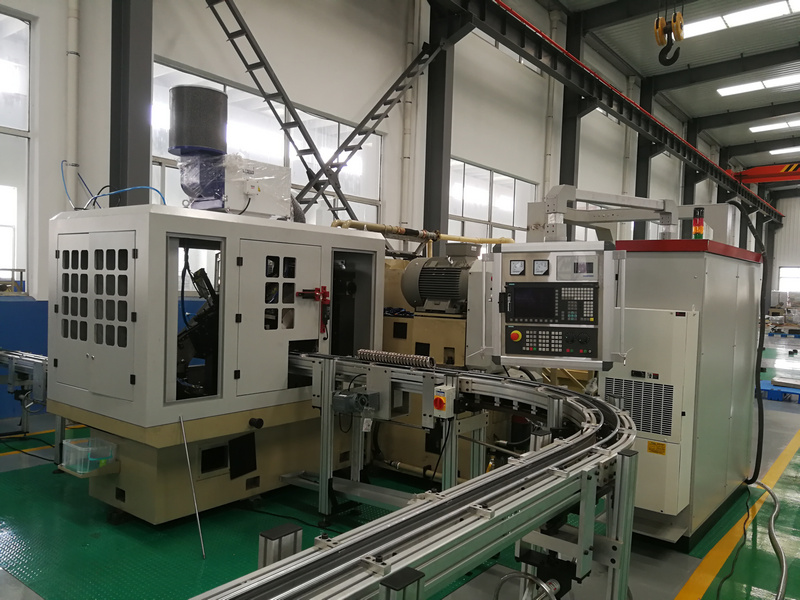
Ceramic parts used in electronics and medical devices require high precision and smooth surfaces. Double-sided grinding ensures minimal surface defects and tight tolerances.
For hardened steel components, a double disc grinding machine for stainless steel provides efficient material removal while maintaining dimensional accuracy.
Composite parts used in aerospace applications benefit from reduced delamination and improved surface consistency during grinding.
The grinding process for advanced materials typically includes:
Pre-machining or shaping of raw materials
Controlled feeding into the grinding zone
Simultaneous dual-surface grinding with optimized parameters
Cooling and debris removal
Final inspection for dimensional accuracy
Careful parameter control is essential to achieve optimal results with these materials.
Advanced abrasives such as diamond and CBN wheels are commonly used for processing hard materials. These tools provide higher cutting efficiency and longer lifespan.
Modern machines incorporate CNC systems that allow precise control of grinding pressure, speed, and feed rate.
Efficient coolant systems help maintain temperature stability and extend tool life, especially when working with heat-sensitive materials.
As industries continue to adopt advanced materials, the demand for reliable and precise machining solutions will only grow. The double disc grinding machine offers a proven method for handling complex materials while maintaining efficiency and quality.