


With the development of materials science, an increasing number of high-hardness materials such as alumina ceramics, silicon carbide, and new composites are being applied in aerospace and semiconductor fields. While these materials offer excellent performance, they are extremely difficult to machine and are prone to brittle fracture under grinding pressure. Double disc grinding machines have demonstrated excellent adaptability under these challenges. Their core advantage lies in providing very steady and symmetrical normal grinding forces, avoiding the internal stress concentration that occurs when a part is pressed from a single side. In combination with diamond super-abrasive wheels, double disc grinders can maintain extremely high removal rates while keeping the depth of surface damage layers within a minimal range, ensuring the structural integrity of the workpiece.
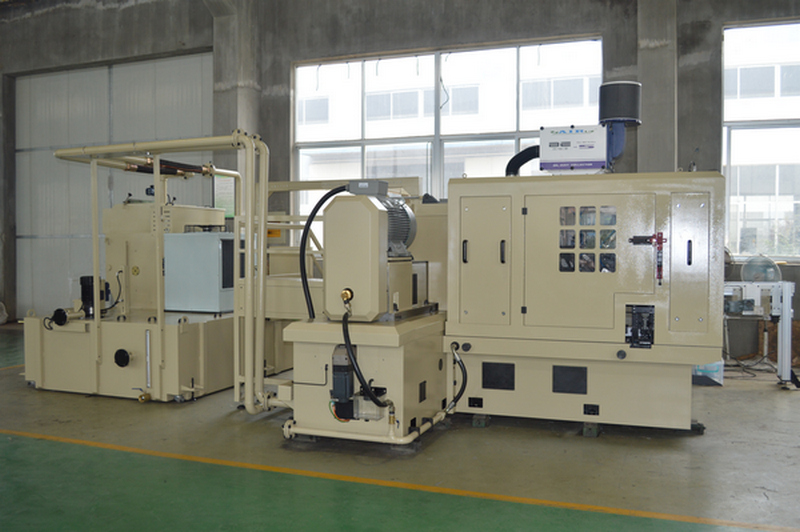
In the processing of composite materials, the cooling system of the double disc grinder plays a vital role. Composites are often highly sensitive to temperature; localized heat buildup can lead to the softening of matrix resins or the degradation of reinforcing fibers. By configuring high-pressure center-cooling technology, cutting fluid can be sprayed directly into the core of the grinding arc zone, rapidly dissipating heat and discharging debris. Additionally, frequency-controlled spindles on modern equipment allow engineers to flexibly adjust the grinding wheel linear speed based on material characteristics, enabling a seamless switch between low-speed fine grinding and high-speed roughing. This superior ability to handle diverse materials means that the double disc grinding machine is no longer just a tool for traditional metalworking, but has become a vital instrument for achieving precision manufacturing in modern high-tech industries.