


In today’s highly competitive global manufacturing environment, efficiency and consistency are critical requirements for precision component production. The double disc grinding machine has become a widely recognized solution for high-volume precision manufacturing due to its unique grinding process.
The key advantage of double disc grinding lies in its simultaneous machining principle. Two opposing grinding wheels process both end faces of a workpiece at the same time in a single pass. This significantly reduces cycle time and eliminates positioning errors caused by multiple clamping operations, ensuring excellent parallelism and thickness control.
For high-volume production, process stability is equally important. Double disc grinding machines are typically built with rigid machine beds and high-precision spindle systems, allowing them to maintain stable grinding conditions during long-term continuous operation. This makes them ideal for industries such as automotive components, bearings, powder metallurgy, and hydraulic parts, where consistency is essential.
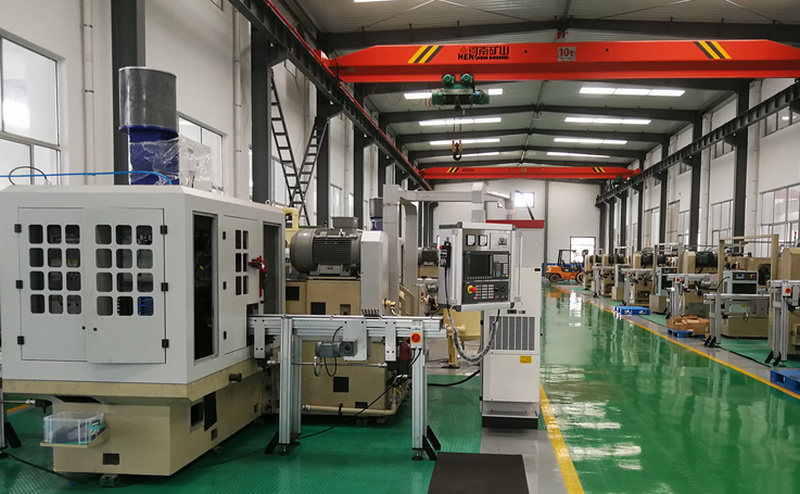
Another important benefit is process repeatability. With CNC control, parameters such as feed rate, grinding pressure, and compensation values can be precisely managed. Even in large-scale production, dimensional variation remains minimal, reducing rework and quality fluctuations.
From a total manufacturing cost perspective, double disc grinding offers clear advantages in output efficiency, yield rate, and labor reduction. As a result, more manufacturers serving international markets are adopting double disc grinding as a core production process.