


In the precision manufacturing industry, meeting extremely high dimensional requirements while achieving highly efficient production methods is essential. As a high-performance machining equipment, the double disc grinding machine, with its unique processing method and stable performance, is becoming a core piece of equipment across multiple sectors including automotive components, the motor industry, and new materials processing.
One of the primary advantages of double disc grinders is their capability to simultaneously grind two parallel surfaces of a workpiece. Compared to single-surface grinding, this method significantly enhances processing efficiency while ensuring the parallelism and surface quality of both surfaces. For components requiring strict thickness and precision control—such as valve plates, bearings, and seals—this approach delivers greater consistency and tighter tolerance standards.
Additionally, double disc grinding machines offer high repeat positioning accuracy, ensuring product consistency during batch production. For modern industry, stable production quality is not only crucial for enhancing corporate competitiveness but also impacts the reliability of the entire manufacturing system. Therefore, employing high-precision double disc grinding machines for batch processing significantly reduces defect rates and boosts production efficiency.
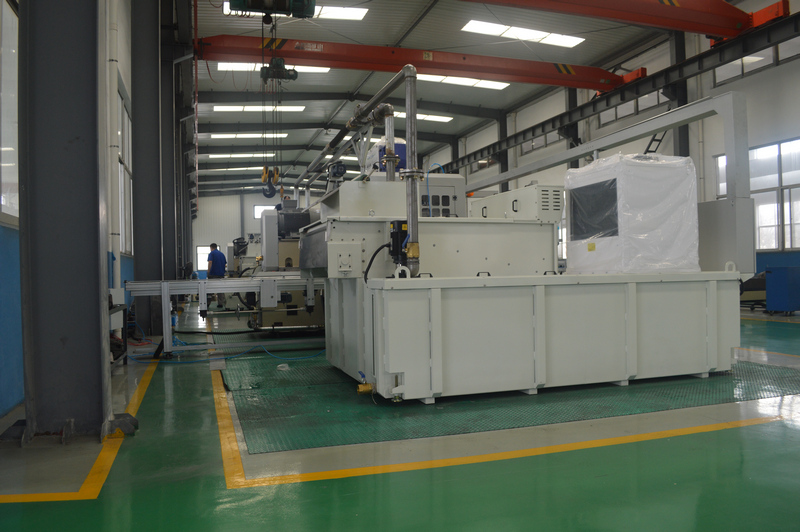
With advancements in manufacturing technology, the automation level of double disc grinders continues to rise. Traditional mechanical operations are gradually being replaced by CNC control systems. Combined with automated feeding, in-line inspection, and intelligent compensation technologies, production lines are becoming increasingly intelligent. This not only reduces reliance on skilled operators but also enhances overall production line utilization and machining stability.
Looking ahead, the application prospects for double disc grinding machines will expand further with growing demand for new material processing and continuous advancements in precision manufacturing. Whether in high-precision machinery manufacturing or new material R&D, this efficient, high-precision equipment will play an increasingly vital role, becoming an indispensable tool for manufacturers pursuing automated and refined processing.