


In recent years, manufacturing demands for precision have continuously increased, particularly in new energy vehicles, hydraulic equipment, powder metallurgy, and bearings. Beyond absolute precision, achieving “batch-to-batch consistency” proves even more challenging—and this is precisely why double disc grinding machines are being widely reintroduced across factories.
Traditional machining methods require multiple flipping and repositioning of workpieces, with each re-clamping introducing potential errors. Especially in high-volume production scenarios, these errors accumulate over time, ultimately causing batch instability. Quality engineers often summarize this situation with the phrase: “Every clamping operation carries a risk.”
The greatest value of double disc grinding machines lies in eliminating these risks.
Their single-setup, simultaneous grinding process on both surfaces reduces the error chain at its source. Simultaneously, two grinding wheels operating in sync ensure the workpiece maintains consistent parallelism, thickness, and flatness throughout the entire batch.
Modern double disc grinding machines are also widely equipped with features like automatic wheel dressing, closed-loop pressure control, and temperature compensation. This means the equipment can maintain consistent grinding depth during prolonged operation, preventing processing deviations caused by wheel wear, temperature fluctuations, or pressure variations.
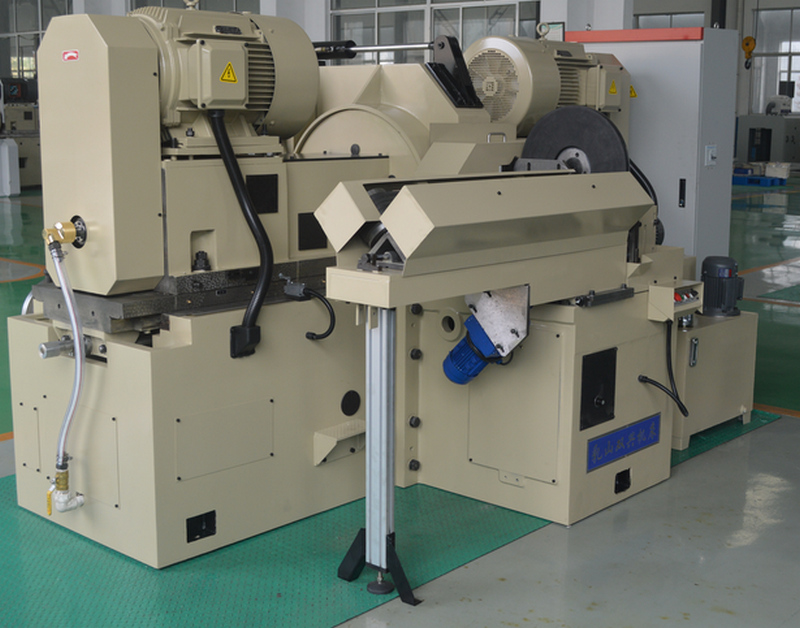
For enterprises, batch consistency is not merely a quality issue but a critical cost factor.
Higher consistency translates to:
Reduced inspection burden
Lower rework rates
Fewer customer complaints
More stable delivery
This directly enhances overall competitiveness.
As manufacturing advances toward greater precision and scale, double disc grinding machines are becoming the standard equipment for ensuring batch stability.