


At a time when the manufacturing industry is accelerating automation and intelligence, traditional machining equipment is facing the challenge and opportunity of comprehensive upgrading. As one of the core equipments in the precision machining process, double disc grinding machine is taking advantage of the automation technology to revitalize its vitality.
So, under the trend of automation, how to improve the processing efficiency of double disc grinding machine?
First, a clamping, double-sided synchronous processing
Compared with traditional single-end grinding machines, double disc grinding machines have a natural efficiency advantage: a single clamping can simultaneously complete the precision grinding of both sides of the workpiece, without the need to repeat the positioning and flanging, which greatly saves the clamping and processing time.
Automation further amplifies this advantage - equipped with automatic loading and unloading device, the workpiece from conveying, positioning, grinding to unloading, the entire process to achieve unmanned continuous operation, greatly enhancing the production capacity and stability.
Second, the intelligent feeding system improves the continuity
The introduction of the automatic feeding system is a key step towards automation of the grinding machine. By setting up conveyor belts, manipulators or vibrating disks, workpieces can enter the grinding zone automatically and precisely, and exit automatically after processing is completed.
The Intelligent Feeding System also has the ability to automatically detect and adjust the workpiece attitude and thickness, reducing manual intervention and non-conformity, making production more efficient and stable.
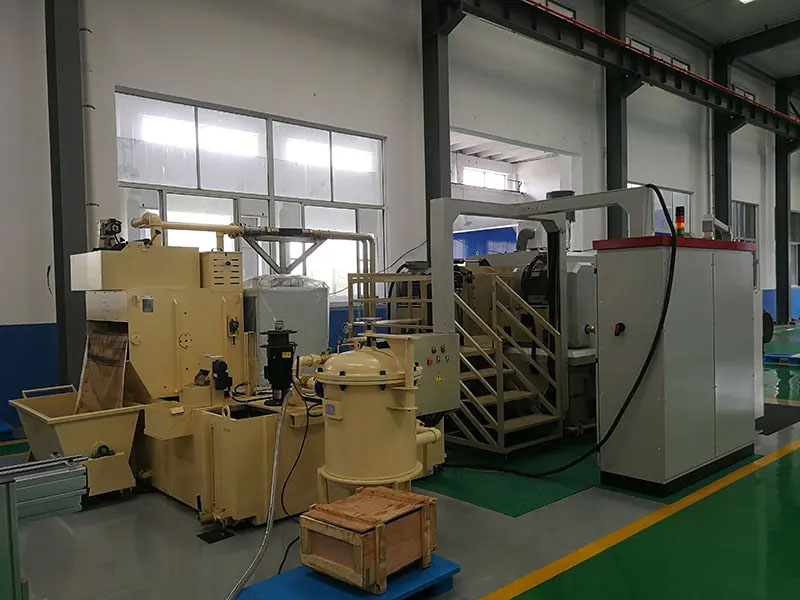
Third, digital control to bring precision and efficiency double enhancement
Modern double disc grinding machines are commonly equipped with PLC program controllers or numerical control systems (CNC), replacing the traditional manual adjustment method. Operators can quickly set parameters such as grinding thickness, feed rate, coolant spraying frequency, etc. through the touch screen.
Digital control not only makes the parameter setting more fine and traceable, but also can realize real-time monitoring and automatic compensation with sensors, such as grinding wheel wear compensation, workpiece thickness measurement feedback, etc., to ensure that each workpiece meets the preset requirements, truly realizing “high efficiency + high yield”.
Fourth, automatic monitoring and fault warning, reduce downtime
In order to ensure the continuous and efficient operation of the equipment, modern double disc grinding machines have been equipped with a variety of sensors and early warning systems, which can monitor the spindle vibration, temperature, load, wheel status and so on.
These monitoring data can be analyzed through the background of the system to automatically determine whether there is abnormal wear and tear, overload, insufficient cooling, etc., and issue an early warning or even shutdown to protect the equipment. This kind of predictive maintenance not only reduces the unplanned downtime caused by equipment failure, but also improves the operation efficiency and equipment life of the whole line.
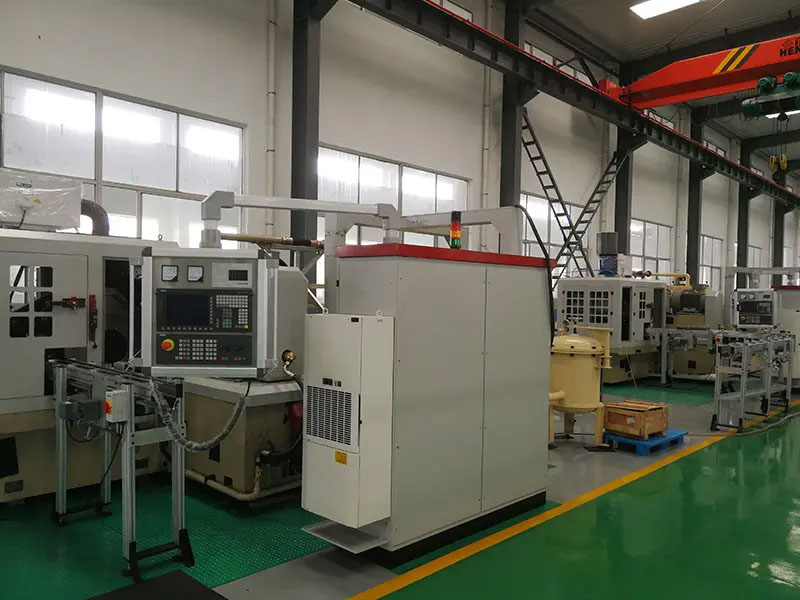
Fifth, flexible production to adapt to the diversified needs
As customers' demand for small-lot, multi-variety and high-precision products continues to rise, automated double disc grinding machines are also being iterated. By quickly changing fixtures and switching preset program parameters, one machine can cope with different specifications of workpiece processing tasks.
This flexible design greatly improves production response speed and switching efficiency, making it an ideal processing option for small to medium batches and diverse order scenarios.