


Global manufacturing is undergoing a transformation driven by automation, precision engineering, and the demand for higher productivity. In this context, advanced grinding technologies are playing an increasingly critical role in ensuring component accuracy and surface quality. Among these technologies, the double disc grinding machine stands out as a highly efficient solution for processing flat and parallel surfaces at scale.
For international B2B buyers seeking reliable and cost-effective machining solutions, understanding the operational value and market relevance of this equipment is essential. This article provides a comprehensive overview of industry demand, technological evolution, and practical applications.
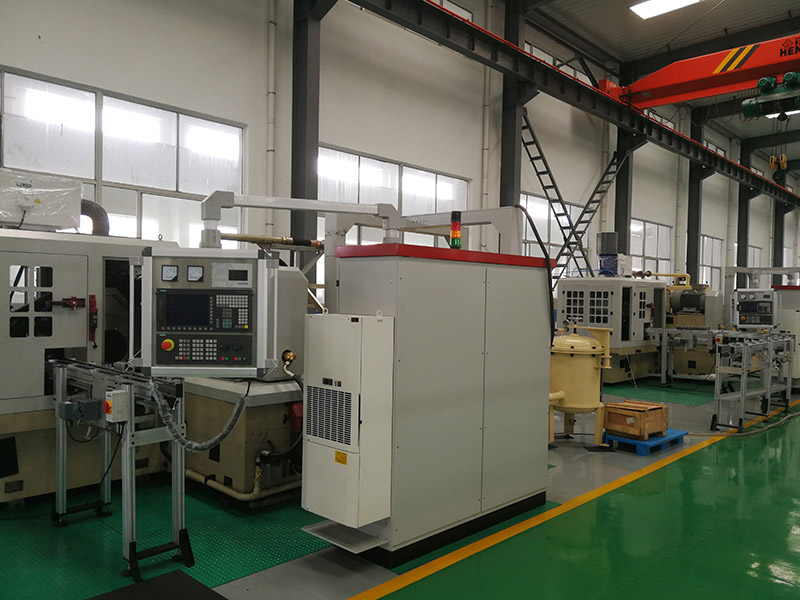
Modern industries such as automotive, aerospace, energy, and industrial equipment manufacturing require components with extremely tight tolerances and consistent surface finishes. As global supply chins become more competitive, manufacturers must adopt equipment that ensures both quality and efficiency.
According to market research, the global grinding machinery market is projected to exceed USD 6 billion by the end of the decade, with steady growth driven by precision engineering requirements. The increasing adoption of electric vehicles, high-performance bearings, and advanced mechanical systems has further accelerated the need for high-precision grinding processes.
In this environment, double-sided grinding technology has emerged as a preferred solution for manufacturers aiming to reduce cycle time while maintaining strict dimensional accuracy.
The defining feature of a double disc grinding system is its ability to process both sides of a workpiece simultaneously. This configuration significantly improves productivity compared to traditional single-sided grinding methods.
The process involves placing a workpiece between two rotating abrasive wheels. These wheels operate in opposite directions, removing material from both sides in a single pass. The result is a highly uniform thickness and superior parallelism.
Simultaneous dual-surface grinding reduces processing time
Improved dimensional accuracy ensures consistent product quality
Reduced handling and repositioning minimizes labor input
Enhanced surface finish eliminates the need for secondary operations
These advantages make the equipment particularly suitable for high-volume production environments.
Automotive manufacturers rely heavily on precision-ground components such as transmission gears, bearing rings, and brake system parts. With the rapid growth of electric vehicles, the demand for high-efficiency machining solutions has increased significantly.
A double disc grinding machine for automotive parts enables manufacturers to achieve consistent thickness and flatness, which are critical for performance and durability.
Bearing components require extremely tight tolerances and smooth surfaces to ensure operational reliability. Double-sided grinding is widely used in this sector to process bearing races and rollers with high efficiency.
The use of a high precision double disc grinding machine allows manufacturers to maintain strict quality standards while improving throughput.
In industries such as oil & gas, wind energy, and heavy machinery, components must withstand harsh operating conditions. Precision grinding ensures that parts meet durability and performance requirements.
A double sided grinding machine for metal parts is often used to process hardened steels and alloys in these applications.
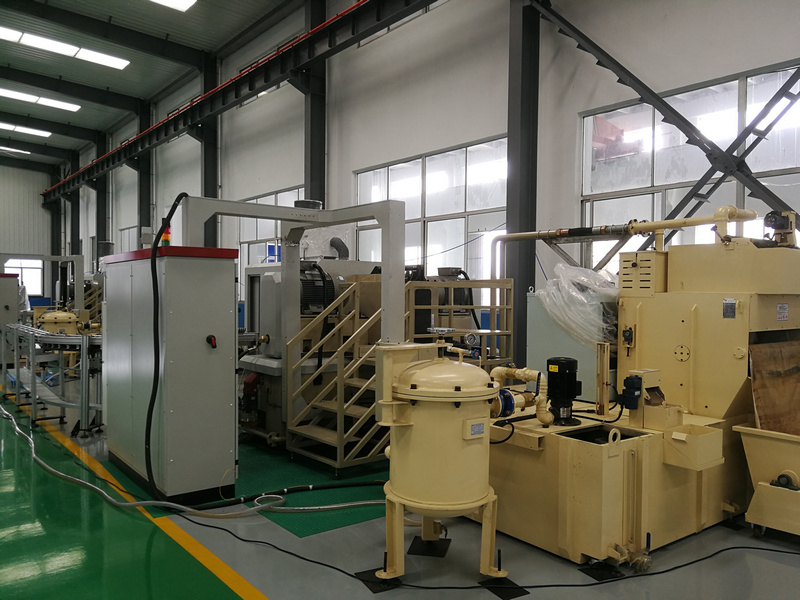
To better understand its value, it is useful to look at a simplified production workflow involving double disc grinding:
Raw materials such as forged or stamped components are pre-machined to approximate dimensions.
Workpieces are automatically or manually fed into the grinding zone, typically using a carrier system.
Both sides of the component are ground in a single operation, ensuring uniform material removal.
Finished parts are inspected for thickness, parallelism, and surface roughness before moving to the next stage.
This streamlined process significantly reduces production time while improving consistency.
Modern grinding machines increasingly incorporate CNC systems, enabling precise control over grinding parameters. This allows manufacturers to adapt quickly to different product specifications and achieve repeatable accuracy.
Automation is becoming a standard feature in precision manufacturing. Robotic loading systems and automated inspection tools are now commonly integrated into grinding lines, reducing labor dependency and improving efficiency.
The development of new abrasive technologies, such as cubic boron nitride (CBN) and diamond wheels, has improved grinding performance. These materials offer longer service life and better heat resistance, making them ideal for hard-to-machine materials.
Manufacturers are increasingly focused on reducing energy consumption and waste. New machine designs incorporate optimized cooling systems and energy-efficient motors, aligning with global sustainability goals.
Choosing the right grinding solution requires a clear understanding of production needs. Key factors to consider include:
Material Compatibility: Ensure the machine is suitable for the materials being processed, such as hardened steel, ceramics, or composites.
Production Volume: High-volume production environments benefit from automated systems with continuous feeding mechanisms.
Precision Requirements: Evaluate the machine’s ability to meet tolerance and surface finish specifications.
Supplier Capabilities: Work with experienced manufacturers who can provide technical support, customization options, and after-sales service.
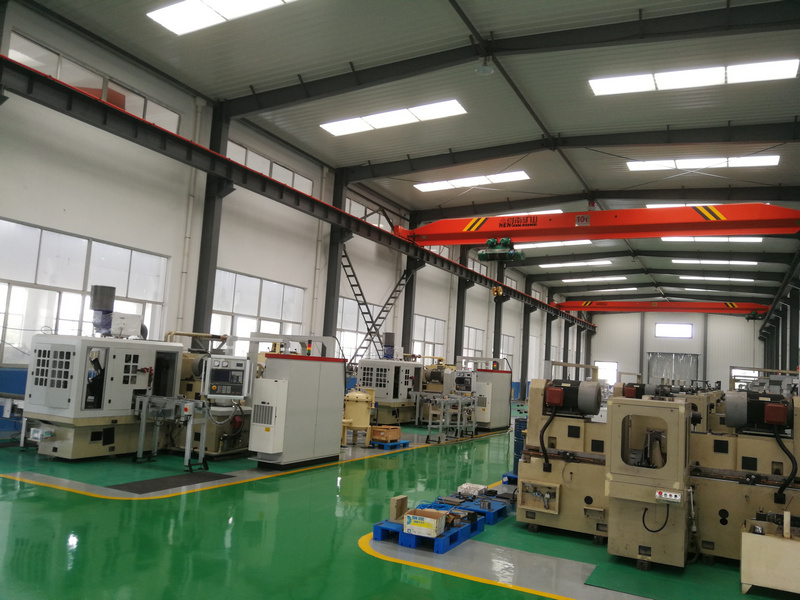
The future of precision grinding equipment remains promising, driven by industrial automation and the demand for high-performance components. Emerging markets in Asia and Eastern Europe are investing heavily in advanced manufacturing technologies, creating new opportunities for equipment suppliers.
For B2B buyers, the focus is shifting from simply purchasing machinery to investing in long-term production solutions. Reliability, scalability, and technical support are now key decision-making factors.
As global industries continue to demand higher precision and efficiency, advanced grinding technologies are becoming indispensable. The double disc grinding machine offers a powerful combination of speed, accuracy, and cost-effectiveness, making it a valuable asset for manufacturers across multiple sectors.
Its ability to streamline production processes while maintaining strict quality standards positions it as a strategic investment for companies aiming to stay competitive in the global market.
If you are looking to upgrade your production line with high-performance grinding solutions, now is the time to explore advanced equipment tailored to your needs. Contact our engineering team today to discuss your application requirements and discover how our precision grinding systems can help you achieve superior results and long-term operational efficiency.